About Dukezong Ancient Town / Moonlight City
“A highland Tibetan town where Buddhist devotion, yak butter tea, and spontaneous communal dancing coexist with increasing tourism — mystical at dawn, lively at dusk, and cold enough to remind you you're on the edge of the Tibetan Plateau.”
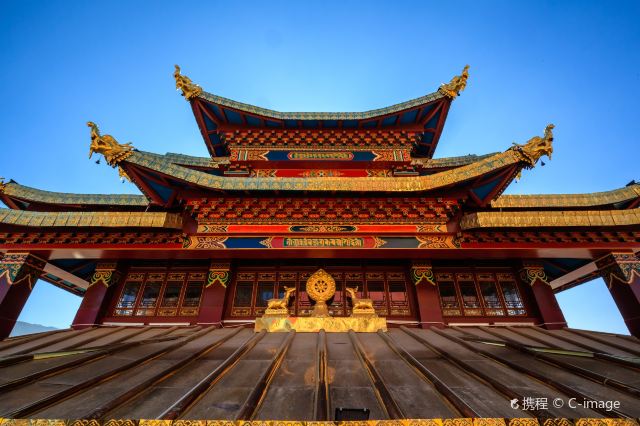
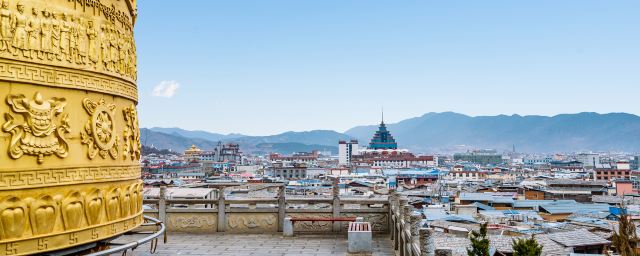
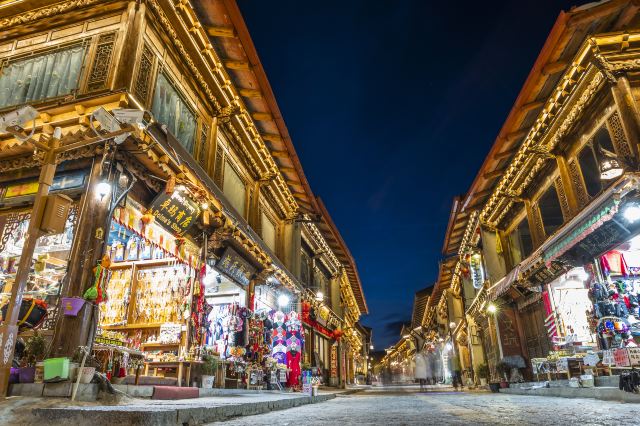
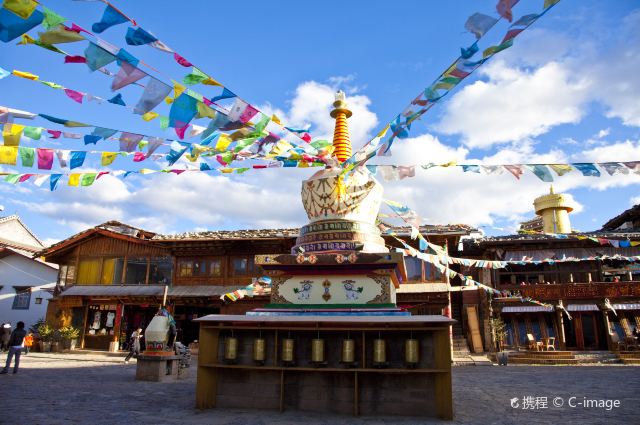
Dukezong Ancient Town is the old town center of Shangri-La, and despite suffering a devastating fire in 2014 that destroyed much of it, the rebuilt town retains its Tibetan character with whitewashed stone buildings, prayer flags strung across narrow alleys, and the smell of yak butter in the air. The star attraction is the giant golden prayer wheel atop Guishan Hill — at 21 meters tall and 60 tonnes, it genuinely requires multiple people to turn it, creating spontaneous moments of cooperation between strangers. The nightly bonfire dancing at Sifang Street (around 7:30-9 PM) is infectious — Tibetan locals lead the circle dance and visitors join in freely. The town has become increasingly commercial with souvenir shops and bars, but Tibetan cultural elements (thangka painting workshops, incense making, traditional teahouses) remain authentic. At 3,200 meters elevation, altitude sickness is a real concern. The town is free to enter and best experienced in the evening when the prayer wheel glows gold and the bonfire dancing begins.
Top Questions from Travelers
Why This Place Matters
Dukezong was founded during the Tang Dynasty (676-679 AD) as a critical junction on the ancient Tea Horse Road — the network of mule caravan paths that transported Yunnan tea to Tibet in exchange for Tibetan horses, linking Chinese and Tibetan civilizations for over a millennium. The name carries dual meaning: 'castle built on stone' in Tibetan and 'moonlight city' — legend says moonlight reflecting off the cobblestones made the town glow silver at night. The lotus-flower street layout was designed according to the Buddhist concept of Shambhala, the mythical enlightened kingdom. Though the devastating 2014 fire destroyed much of the physical fabric, the cultural practices — prayer wheel walking, bonfire dancing, thangka painting, incense making — remain living traditions, not tourist performances.
Need help planning?
ChinaPal handles everything
- Book English-speaking guides
- Arrange transport & tickets
- Real-time help during your visit
- Restaurant reservations nearby
Highlights
3 iconic experiences that define a visit
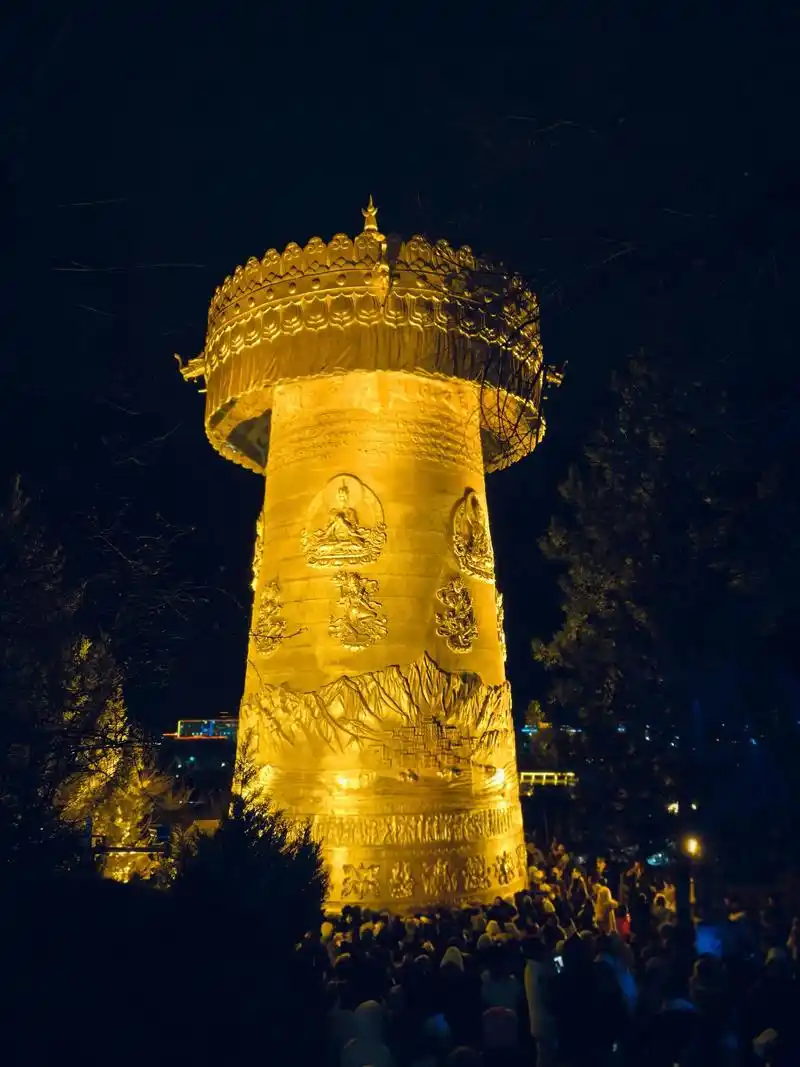
World's largest prayer wheel (转经筒)
A massive golden prayer wheel atop Guishan Hill — 21 meters tall, weighing 60 tonnes, containing millions of inscribed mantras and sutras. Turning it requires the cooperative effort of multiple people pushing together, creating a uniquely communal spiritual moment.
The physicality of pushing this enormous wheel with strangers — calling out in unison, straining together — is surprisingly moving regardless of religious belief. When the copper bells ring as it turns, the sound carries across the entire town.
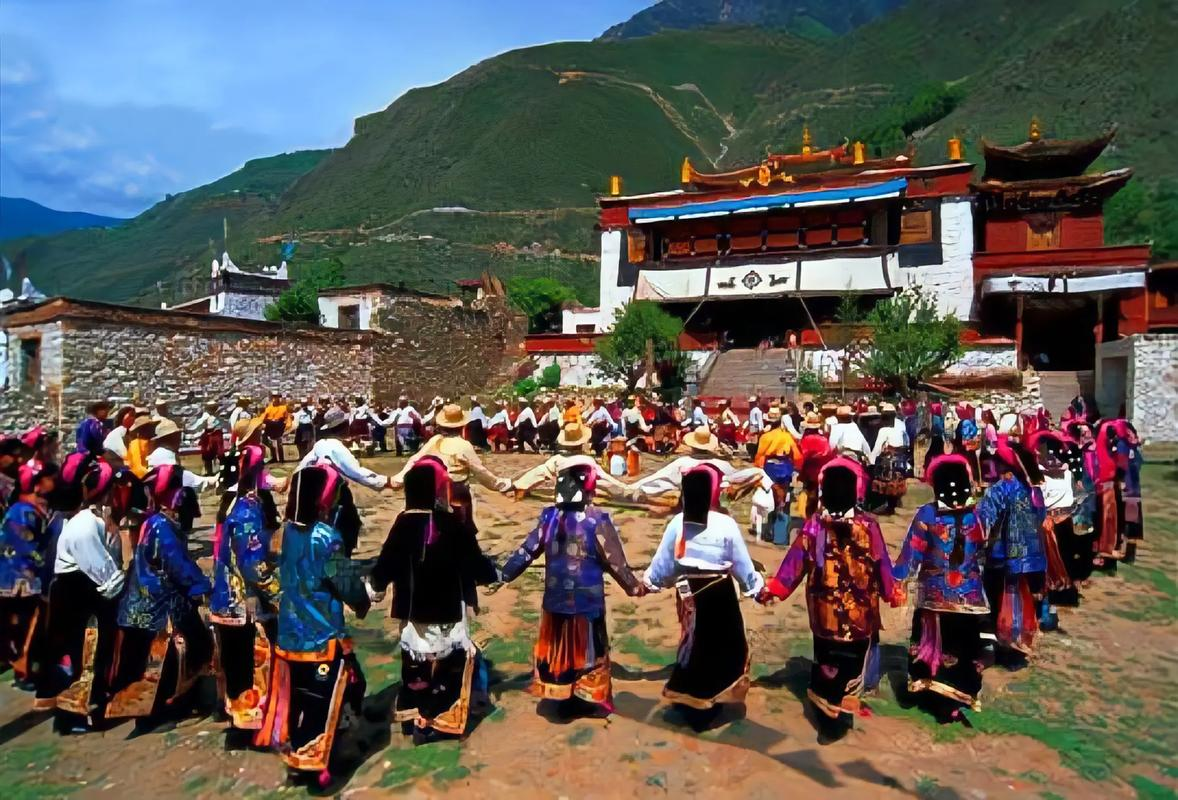 Universal Appeal
Nightly bonfire dancing (锅庄舞)
Every evening around 7:30 PM, local Tibetans lead a communal circle dance around a bonfire in Sifang Street. Visitors are warmly welcomed to join — th...
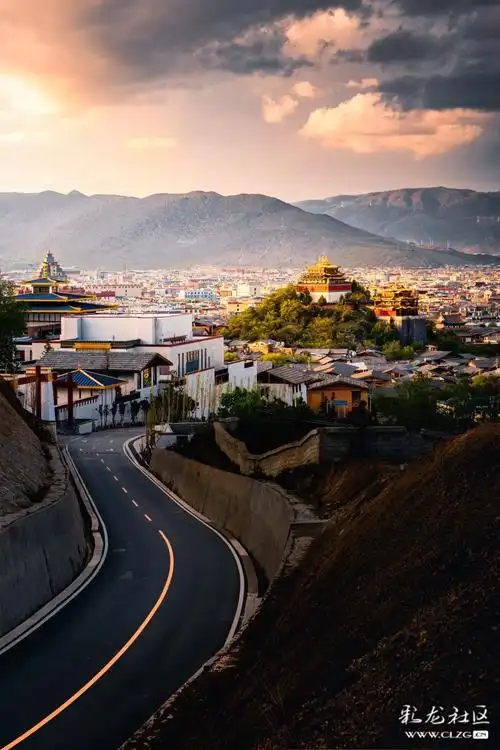 Culturally Interesting
Tibetan cultural experiences
The town offers authentic Tibetan cultural workshops — thangka painting with local artists, traditional incense making, and visits to working Buddhist...
What Most Visitors Miss
Early morning prayer wheel circuit
At dawn, elderly Tibetans walk the town's prayer wheel path — dozens of prayer wheels set into the town walls. Joining them (just walk and spin each wheel clockwise) is one of the most peaceful cultural experiences in Shangri-La.
Surviving pre-fire buildings on Jinlong Street
Most visitors don't know the 2014 fire destroyed two-thirds of the town. A few alleys, particularly on Jinlong Street, still have original centuries-old buildings with traditional Tibetan construction — no nails, all mortise-and-tenon joints.
Diqing Prefecture Museum (迪庆藏族自治州博物馆)
A well-curated free museum near the town explaining Tibetan, Naxi, and Lisu cultures of the region. Provides essential context for understanding the town's significance on the ancient Tea Horse Road.
Plan Your Visit
How Long to Visit
1.5-2 hours (walk to the prayer wheel, turn it, see the main streets
prayer wheel, town exploration, bonfire dancing, dinner at a Tibetan restaurant
Full day or overnight (thangka painting workshop, Tibetan incense making, visit Diqing Museum, morning and evening atmospheres
Smart Route
Arrive late afternoon
walk through the main streets to orient yourself
climb Guishan Hill to the prayer wheel for sunset
descend to Sifang Street for the 7:30 PM bonfire dancing
dinner at a Tibetan restaurant (try yak hotpot or stone-pot chicken)
evening stroll through the illuminated alleys
next morning: early prayer wheel walk with locals
non-heritage center for a workshop.
Best Time to Visit
Late afternoon to evening — climb to the prayer wheel for sunset views over the town, then descend for the bonfire dancing (7:30-9 PM) and dinner
Chinese public holidays — especially National Day and Spring Festival
By Season
Spring
(March-May) is pleasant with wildflowers. Winter (December-February) is very cold (-10°C at night) but has a special charm with snow on the rooftops and fireworks during Spring Festival.
Summer
Autumn
(September-November) has the best weather — clear skies, mild temperatures, and the least rain. Spring (March-May) is pleasant with wildflowers.
Winter
(December-February) is very cold (-10°C at night) but has a special charm with snow on the rooftops and fireworks during Spring Festival. Summer (June-August) is rainy season.
Stay overnight in the ancient town to experience both the evening bonfire dancing and the serene early morning when the streets belong to local Tibetans going about their daily routines — turning prayer wheels, offering incense, chatting at teahouses.
What to Skip
The souvenir shops on the main drag are all similar and overpriced — better unique finds in the side alleys. Don't buy yak meat products from unlicensed street vendors. Skip the bars if you're feeling altitude effects — alcohol worsens symptoms significantly.
Pro Tips
The stone-pot chicken (石锅鸡) is the signature local dish — hearty and warming at altitude. For Tibetan costume photos, negotiate an all-inclusive price (makeup + accessories + costume) upfront — ¥50 is reasonable. The view from the observation platform on Guishan Hill encompasses the entire town in its lotus-flower layout.
Photo Spots
Giant prayer wheel at sunset
Climb Guishan Hill 30 minutes before sunset. The golden wheel catches the last light dramatically against the darkening sky.
Sifang Street during bonfire dancing
Photograph from the elevated surrounding walkways/balconies for the best overhead view of the circle dance and fire.
Prayer flag alleys
Morning light filtering through colorful prayer flags strung between buildings creates beautiful dappled light patterns.
Pair With
Songzanlin Monastery (松赞林景区)
15 minutes by car from the ancient town
The 'Little Potala Palace' — Yunnan's largest Tibetan Buddhist monastery with 700+ monks in residence. Essential Shangri-La experience.
Pudacuo National Park (普达措国家公园)
30 minutes by car
Pristine highland lakes, alpine meadows, and old-growth forests at 3,500-4,000m. One of China's most beautiful national parks.
Napa Lake (纳帕海)
15 minutes by car
A seasonal wetland that becomes a mirror-like lake in summer and a golden grassland in autumn. Stunning photography location with mountain backdrop.
Tickets & Access
Ancient town entry
QR code scan may be needed at entrances
Guishan Temple
Limited daily capacity, register at entrance
Tibetan costume rental for photos
Includes makeup and accessories at some shops
Thangka painting workshop
Learn traditional Tibetan religious painting
Opening Hours
Open 24 hours, year-round. Shops typically open 9:00 AM-9:30 PM. Bonfire dancing: approximately 7:30-9:00 PM nightly.
How to Buy
No advance booking required. Walk in anytime.
Passport: Yes — QR code entry scanning accepts passport numbers.
Queue Situation
Minimal queues. The prayer wheel area gets crowded at sunset but there's no formal queue.
Tips & Warnings
Altitude sickness is a genuine risk at 3,200+ meters
Move slowly, drink lots of water, avoid alcohol for the first 24 hours. Oxygen canisters are available at pharmacies and hotels (¥10-20). If headache, nausea, or dizziness persist or worsen, descend to a lower elevation. Most people acclimatize in 1-2 days. If symptoms are worrying you, message our team — we can locate the nearest pharmacy, arrange oxygen delivery, or help you get to the local hospital.
The 2014 fire destroyed much of the original town
Set expectations accordingly — much of what you see is rebuilt reconstruction, not original ancient architecture. The cultural experiences (prayer wheel, dancing, temples) are authentic, but many buildings are new.
Extreme temperature swings and intense UV
Daytime can be warm (15-20°C in summer) but evenings plummet (0-5°C even in summer, below -10°C in winter). UV at this altitude burns quickly. Always carry a warm jacket and sunscreen.
What to Bring
Wear
Warm layers — essential even in summer evenings. Down jacket in winter. Comfortable walking shoes for cobblestones. Sun protection (hat, sunglasses, UV-protective clothing).
Bring
Warm clothing, sunscreen (SPF 50+), water bottle, camera, cash (some shops don't accept mobile payment), any altitude sickness medication you use.
Don't Bring
Excessive luggage (cobblestone streets are hard to wheel suitcases on). Alcohol if you haven't acclimatized.
Physical Reality
moderate
The town is walkable but on cobblestones with some slopes. The climb to the prayer wheel on Guishan Hill involves stairs (about 10-15 minutes). At 3,200m elevation, even flat walking feels more strenuous than normal.
Foreigners Watch Out
- Altitude affects everyone differently — don't dismiss early symptoms. Some visitors from sea level experience significant effects at 3,200m.
- Shangri-La is remote — ATMs may not accept international cards. Bring sufficient cash or ensure you have WeChat/Alipay loaded. If you're running low on cash, message us — we can help you locate the nearest working ATM or find an alternative.
- The town's QR code entry system requires WeChat or Alipay. If you can't scan, explain to the security guards with your passport — they generally allow entry manually.
- Respect Tibetan Buddhist customs: walk clockwise around temples, prayer wheels, and stupas. Don't touch religious objects or sit on altar steps. Remove hats inside temples.
- The 'yak butter tea' (酥油茶) is an acquired taste — salty and buttery, unlike any tea you've had. Try it once as a cultural experience.
If Things Go Wrong
Feeling severe altitude sickness symptoms
→ Rest, hydrate, use supplemental oxygen. Visit the local hospital if symptoms include persistent vomiting, severe headache, or confusion. Message our team immediately — we can arrange transport to the hospital, call ahead in Chinese so they're expecting you, and help coordinate your care.
Shops all closed (arrived too late in evening)
→ The illuminated town is beautiful for photography even without shops open. Some restaurants stay open past 10 PM.
Useful Chinese
Tap to reveal the English meaning