About Mount Emei
“Sacred, immense, and otherworldly — mist-wrapped temples emerge from ancient forests as you ascend, until you break through the clouds at the summit to find a golden Buddha presiding over a sea of white.”
Mount Emei is genuinely one of China's most spectacular mountain experiences, combining world-class natural scenery with deep Buddhist heritage. The Golden Summit at 3,079 meters delivers on its promise — on a clear day, you stand above a sea of clouds with the massive golden Puxian Bodhisattva statue gleaming in sunlight, and the four famous natural phenomena (sunrise, sea of clouds, Buddha light, and sacred lamp) are real if conditions cooperate. The mountain is enormous — 48 km of trails with over 5,000 meters of cumulative elevation gain — so choosing between hiking and the bus-plus-cable-car route is an important decision. The wild Tibetan macaques are entertaining but can be aggressive (they snatch bags and food). The Buddhist temples along the way are authentic and atmospheric. However, weather is highly unpredictable — fog and rain occur 200+ days per year, and many visitors reach the summit only to see nothing but white mist. The logistics require planning: bus schedules, cable car queues, and accommodation on the mountain. Foreigners get half-price entry per official policy, which is a rare and welcome perk. Best as a 2-3 day trip from Chengdu, and absolutely worth the effort when the weather cooperates.
Top Questions from Travelers
Why This Place Matters
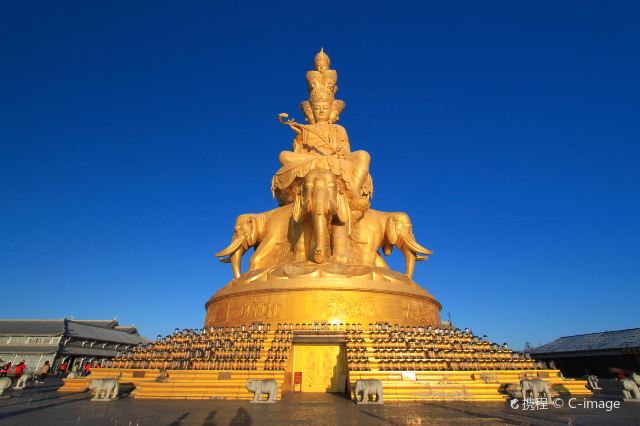
Mount Emei is one of China's Four Sacred Buddhist Mountains, dedicated to Puxian (Samantabhadra) Bodhisattva — the patron of Buddhist practice and meditation. The mountain has been a pilgrimage site for over 2,000 years, with the first temple built in the 1st century AD. The 48-meter golden Puxian statue at the summit, completed in 2006, depicts the bodhisattva riding a six-tusked white elephant, a unique iconographic feature. The mountain also appears in Chinese martial arts fiction — Jin Yong's novels feature the Emei Sect, making the mountain famous in pop culture across the Chinese-speaking world. In 1996, UNESCO inscribed Mount Emei as both a Cultural and Natural World Heritage Site, recognizing its exceptional biodiversity (over 3,200 plant species) alongside its religious significance.
Need help planning?
ChinaPal handles everything
- Book English-speaking guides
- Arrange transport & tickets
- Real-time help during your visit
- Restaurant reservations nearby
Highlights
3 iconic experiences that define a visit
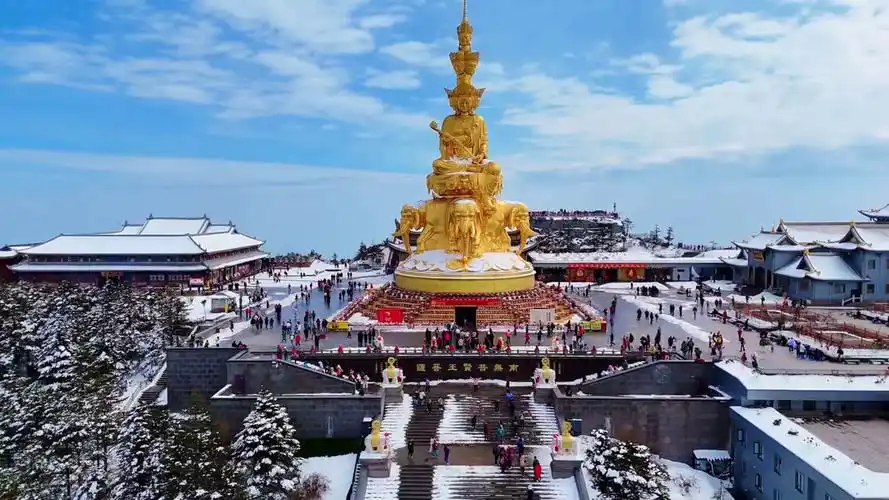
Golden Summit (金顶)
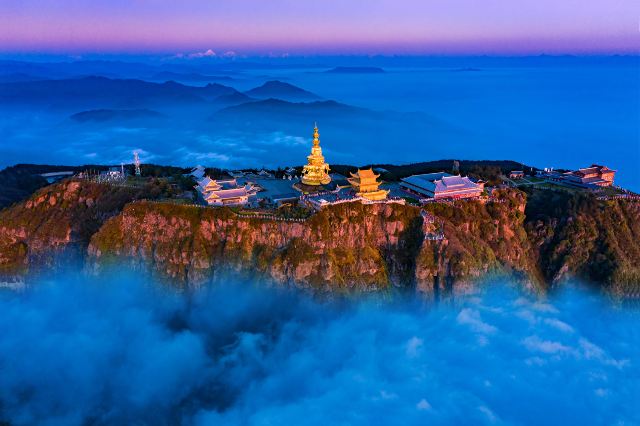
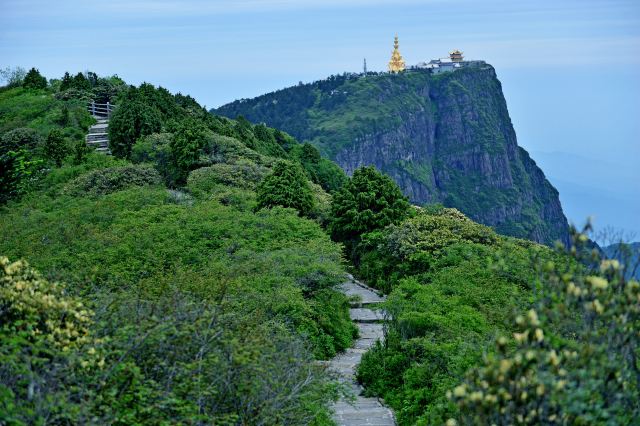
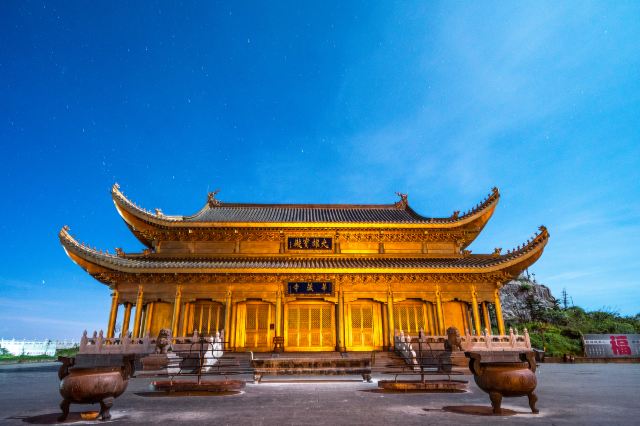
The crown of Mount Emei at 3,079 meters — a dramatic summit platform featuring the 48-meter gilded bronze Puxian Bodhisattva statue (the world's tallest golden Buddha), the Golden Temple, Silver Temple, and Bronze Temple. On clear days, the panoramic view extends to the snowy peaks of western Sichuan.
The four famous natural phenomena occur here: sunrise, sea of clouds (most common), Buddha light (rainbow halo around your shadow — rare), and sacred lamps (mysterious lights at night — extremely rare). The sea of clouds alone is worth the trip.
 Universal Appeal
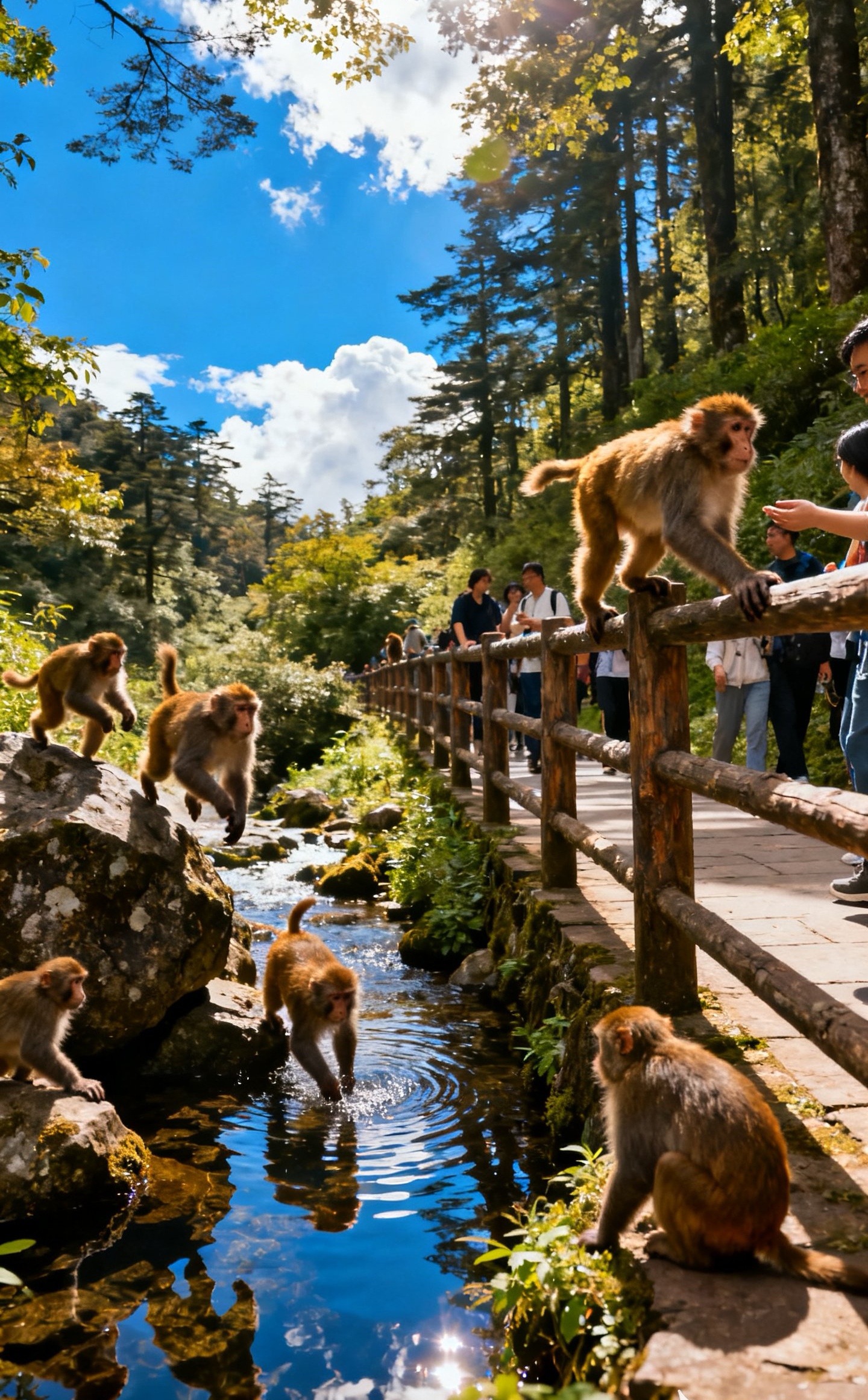
Wild Tibetan Macaques (生态猴区)
A section of trail between Qingyin Pavilion and Hongchunping where wild Tibetan macaques roam freely. These monkeys are famous for their boldness — th...
 Culturally Interesting
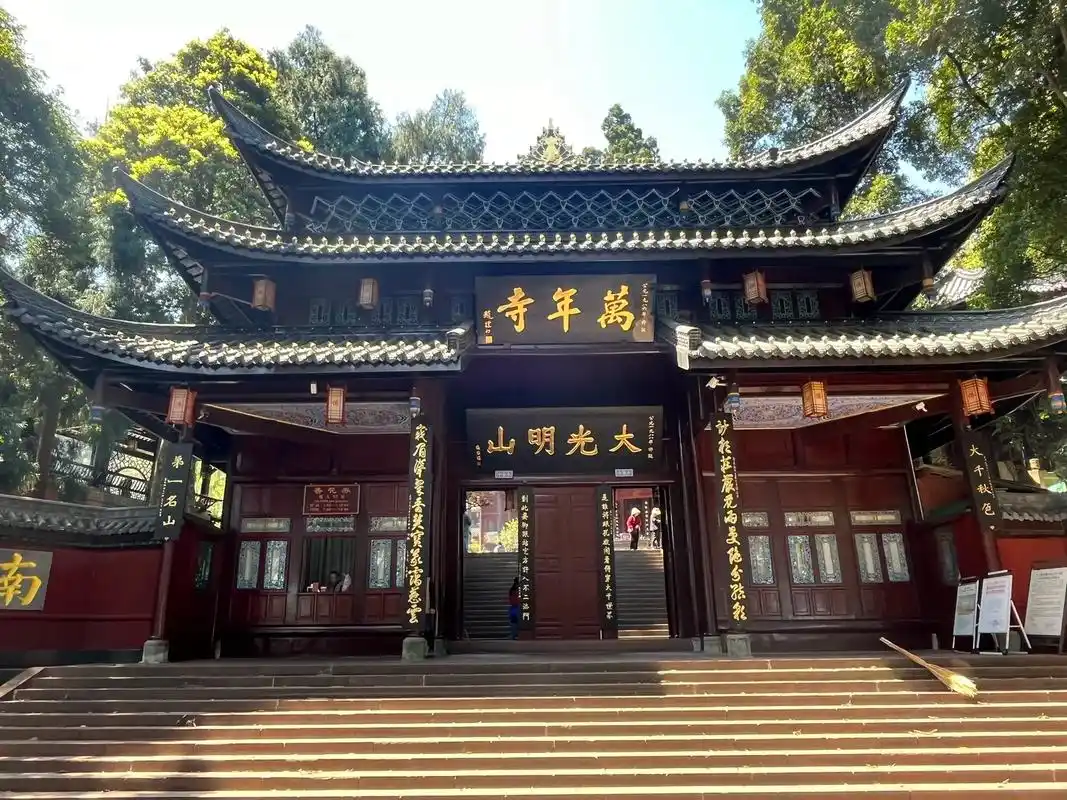
Wannian Temple (万年寺)
A 1,000-year-old temple at 1,020 meters housing a Song Dynasty bronze Puxian Bodhisattva statue riding a six-tusked white elephant — one of China's mo...
What Most Visitors Miss
Qingyin Pavilion (清音阁) and the 'Two Bridges of Clear Sound'
Most bus-and-cable-car visitors skip this mid-mountain area, but it's one of the most atmospheric spots on the mountain — two streams converge at a heart-shaped stone with twin bridges overhead, surrounded by ancient forest. The sound of water echoing off cliffs is the 'clear sound' the name refers to.
Temple overnight stays
Several temples along the hiking route offer simple accommodation (¥40-150 per night) with vegetarian meals. Sleeping in a 1,000-year-old Buddhist temple, waking to morning chanting, and having the misty mountain trails to yourself at dawn is an experience most tourists skip by taking the bus.
The hot springs at the mountain base
Natural hot springs near Baoguo village offer a restorative soak after days of mountain hiking. The Lingxiu Hot Spring and Hongzhushan Hot Spring are well-regarded and surprisingly affordable. If you want to book a hot spring session after your hike, message us — we can reserve a spot and arrange transport from the mountain base.
Plan Your Visit
How Long to Visit
bus + cable car to Golden Summit, explore summit area, return — rushed but doable
s (Day 1: bus to summit, explore Golden Summit and nearby temples, stay overnight on mountain; Day 2: descend via hiking through monkey zone and Qingyin Pavilion
s (full hiking route from Baoguo to Golden Summit via temple stays, experiencing all climate zones and major temples
Smart Route
Day 1: High-speed train from Chengdu (1 hour)
bus/taxi to Baoguo village
sightseeing bus to Leidongping (1.5 hours)
hike 1.5 km to cable car station
cable car to Golden Summit
explore summit temples and viewpoints
stay overnight at summit hotel. Day 2: Watch sunrise
cable car down
sightseeing bus to Wannian Temple cable car
ride down
hike through monkey zone and Qingyin Pavilion
bus back to Baoguo
train to Chengdu.
Best Time to Visit
Arrive at the summit before sunrise (stay overnight on the mountain) for the best chance of seeing the famous sunrise and sea of clouds
July-August (rainy season with poor visibility) and Chinese National Day Golden Week (October 1-7) when queues for buses and cable cars can exceed 2 hours
By Season
Spring
(April-June) and autumn (September-November) offer the best weather and visibility. Winter (December-February) brings stunning snow scenery at the summit — the contrast of snow-covered peaks above green subtropical forest is magical, but trails can be icy and require crampons.
Summer
Autumn
(September-November) offer the best weather and visibility. Winter (December-February) brings stunning snow scenery at the summit — the contrast of snow-covered peaks above green subtropical forest is magical, but trails can be icy and require crampons.
Winter
(December-February) brings stunning snow scenery at the summit — the contrast of snow-covered peaks above green subtropical forest is magical, but trails can be icy and require crampons. Summer is hot at low elevations and very rainy.
Check the weather forecast obsessively before going — a clear summit day is worth rearranging your schedule for. If the previous night had rain and the morning forecast shows clearing, go immediately — those are the best conditions for sea-of-clouds views.
What to Skip
The 'Only Emei Mountain' stage show at the base is divisive — some love it, some find it overpriced. The souvenir shops at every stop sell identical goods. The sedan chair carriers on the summit steps charge ¥300-800 and are not worth it for able-bodied visitors.
Pro Tips
Buy all bus and cable car tickets together at the Baoguo visitor center to avoid separate queues on the mountain. Bring your own food — mountain restaurants charge 3-5x normal prices. The left-flank hiking trail (via Xianfeng Temple) is far less crowded than the right-flank trail and has better scenery including waterfalls.
Photo Spots
Golden Summit sunrise viewpoint (Sheshen Cliff)
Arrive 30 minutes before sunrise. Shoot east toward the rising sun with the sea of clouds below. The golden Puxian statue is behind you — turn around after sunrise for golden-hour light on the statue.
Looking up at the Puxian Bodhisattva statue from the base platform
Late afternoon light gives the golden statue a warm glow. Shoot with a wide-angle lens to capture the full 48-meter height. Clear sky days are essential — fog ruins this shot.
Pair With
Leshan Giant Buddha (乐山大佛)
30-40 minutes by bus or taxi
Just 30 km from Mount Emei — the world's largest stone Buddha (71 meters tall) carved into a cliff face. Most visitors combine these two UNESCO sites in a 3-4 day trip from Chengdu.
Chengdu (成都)
1 hour by high-speed train
Mount Emei is a natural day-trip or overnight extension from Chengdu. Combine with the Giant Panda Breeding Center, Sichuan cuisine, and Jinli Street for a complete Sichuan experience.
Tickets & Access
Entrance ticket (high season)
Valid for 4 consecutive days — plan multi-day visits
Entrance ticket (low season)
Dec 15 - Jan 15 only
Sightseeing bus (round-trip)
Baoguo to Leidongping — essential unless hiking the full trail
Jinding (Golden Summit) cable car
6-minute ride from near Leidongping to the summit
Wannian Temple cable car
Alternative mid-mountain cable car to Wannian Temple area
Opening Hours
Peak season (April 1 - October 31): 6:00 AM - 5:00 PM. Off-season (November 1 - March 31): 7:00 AM - 4:00 PM. Cable car opens 20 minutes before sunrise - 6:00 PM.
How to Buy
Official WeChat mini-program, Trip.com, or Klook. Passport number required for online booking. Walk-up tickets available at the Baoguo visitor center but may sell out during holidays. If you're having trouble with the Chinese booking system or want help planning the logistics — bus, cable car, summit accommodation — message our concierge and we can sort the whole thing out for you.
Passport: Yes — foreigners purchase tickets with passport and receive the official half-price discount. Physical passport required at entry.
Queue Situation
Sightseeing bus: minimal waits off-peak, 30-60 minutes during holidays. Cable car: 15-30 minutes normally, up to 2+ hours during Golden Week and Spring Festival. The 1.5 km hike from Leidongping to the cable car station has no queue but is uphill and takes 30-40 minutes.
Tips & Warnings
Weather at the summit is extremely unpredictable
The summit is frequently fogged in, even when the base is clear. Rain occurs 200+ days per year. If your first summit visit is foggy, your 4-day ticket lets you try again. Check webcams and weather apps before each attempt.
The monkeys can be dangerous
Tibetan macaques are wild animals and can bite or scratch. Keep all bags closed, don't carry food in view, hide shiny objects. If a monkey climbs on you, stay still and let park staff handle it. Don't make eye contact or show teeth (they interpret it as a threat).
Altitude can affect some visitors
The summit is at 3,079 meters. While not extreme altitude, visitors coming directly from sea-level Chengdu may feel shortness of breath, especially when climbing stairs. Take it slow on the summit, stay hydrated, and don't overexert on the steep final stairs. If you're feeling unwell from altitude or exhaustion on the mountain, message our team — we can arrange a sedan chair, find you the nearest rest point, or help coordinate with local medical services.
What to Bring
Wear
Dress in layers — the base can be 30°C in summer while the summit is 10°C. Waterproof jacket is essential year-round. Sturdy hiking shoes with good grip. In winter, bring thermal layers, gloves, and a hat — summit temperatures drop below -10°C.
Bring
Rain jacket (non-negotiable). Warm layers for the summit. Water (2+ liters for hiking). High-energy snacks. Sunscreen and sunglasses for the summit. Walking stick (purchasable at the base for ¥10-20). Portable charger. Offline maps. Cash (some mountain vendors don't accept mobile payment).
Don't Bring
Plastic bags (monkeys target them). Flashy jewelry (monkeys grab shiny objects). Heavy luggage (leave at Baoguo village hotel). Drones (prohibited in the scenic area).
Physical Reality
strenuous
Full hiking: 48 km with 5,300+ meters of cumulative elevation gain over 2-3 days — extremely demanding. Bus + cable car route: physically easy except for the 1.5 km uphill walk from Leidongping to the cable car (30-40 minutes at 2,400m altitude) and stairs at the summit. The summit area itself involves moderate stair climbing between viewpoints.
Foreigners Watch Out
- Foreigners get half-price entry (¥80 high season) — present your physical passport at the ticket office. This is official policy, not a scam.
- Almost no English is spoken or written anywhere on the mountain. Download offline maps and a translation app before ascending.
- Temple accommodation requires basic Chinese to book and check in. Conditions are simple — no heating, shared bathrooms, vegetarian-only meals. If you want to stay in a temple but can't navigate the booking, our concierge can call ahead and reserve a room for you — just tell us which temple and what night.
- The 1.5 km hike from Leidongping bus terminus to the cable car station is uphill at 2,400 meters altitude — it's harder than it sounds. Allow 30-40 minutes.
- In winter, crampons (冰爪) are essential above Leidongping. Rent them for ¥5-10 at vendors near the bus stop. The trails become dangerously icy.
If Things Go Wrong
The summit is completely fogged in and you can't see anything
→ Wait 1-2 hours at the summit — mountain weather changes rapidly. Visit the Golden Temple and Silver Temple interiors while waiting. The sea of clouds often appears briefly between fog banks.
Cable car is closed due to high winds or ice
→ Hike the final section from Jieyin Temple to the summit (about 6 km, 2-3 hours, very steep with 1,500+ steps). In winter, crampons are mandatory for this section.
Useful Chinese
Tap to reveal the English meaning