
About Jiuzhaigou Valley National Park
“Otherworldly and humbling — walking through pristine mountain valleys where every lake looks like it was painted by hand, surrounded by snow peaks, ancient forests, and the gentle presence of Tibetan culture.”
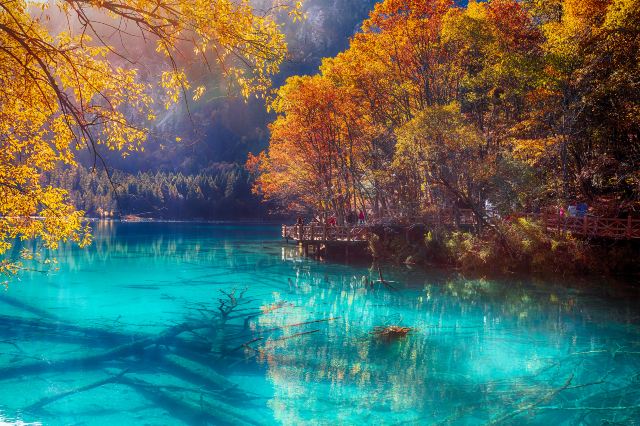
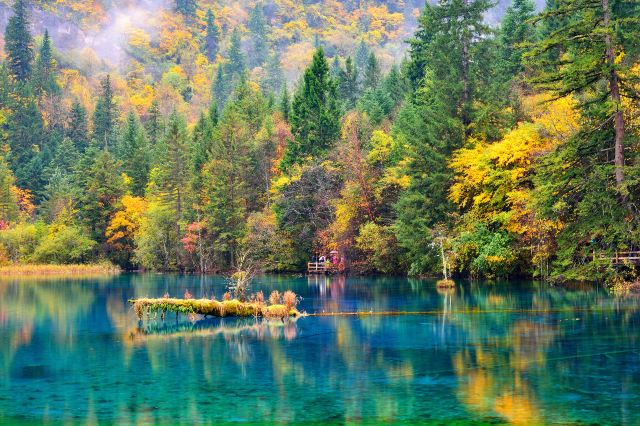
Jiuzhaigou is genuinely one of the most beautiful natural landscapes on Earth, and it lives up to the hype. The turquoise, emerald, and sapphire lakes are not Photoshopped — they really look like that, thanks to calcium carbonate deposits and algae that create colors so intense they seem artificial. The Y-shaped valley system covers three main areas (Shuzheng, Rize, and Zechawa), each with distinct lakes, waterfalls, and forest scenery. The park is extremely well-managed with excellent shuttle buses, boardwalks, and facilities. The downsides: it is far from Chengdu (6-9 hours by road, or 1-hour flight plus 1.5-hour transfer), crowded during peak autumn season (especially National Day week), and you genuinely need a full day minimum. The single restaurant inside is mediocre and overpriced. Altitude (2,000-3,100m) can affect some visitors. But none of these complaints diminish what is an extraordinary natural wonder. Best for nature lovers, photographers, and anyone who appreciates pristine wilderness; the journey to get here is the main barrier.
Top Questions from Travelers
Why This Place Matters
Jiuzhaigou means 'Valley of Nine Villages' — named for the nine Tibetan settlements whose residents have lived in these highlands for centuries. The Tibetan communities here descend from warriors of the ancient Qiang people who were stationed as frontier guards during the Tang Dynasty's conflicts with Tibet. According to local legend, the goddess Semo dropped a mirror given to her by the mountain god Dage, and it shattered into 108 pieces that became the valley's 108 lakes. The Tibetan inhabitants practice a unique blend of Bon (the pre-Buddhist indigenous religion) and Tibetan Buddhism, visible in the prayer flags, mani stones, and small temples throughout the park. The valley remained virtually unknown to the outside world until a 1970s forestry survey rediscovered it, and it opened to tourism in 1984. A devastating 7.0 earthquake in 2017 closed the park for four years, but remarkably, the lakes and waterfalls recovered their colors and beauty — nature's resilience became part of the valley's story.
Need help planning?
ChinaPal handles everything
- Book English-speaking guides
- Arrange transport & tickets
- Real-time help during your visit
- Restaurant reservations nearby
Highlights
5 iconic experiences that define a visit
Five Flower Lake (五花海)
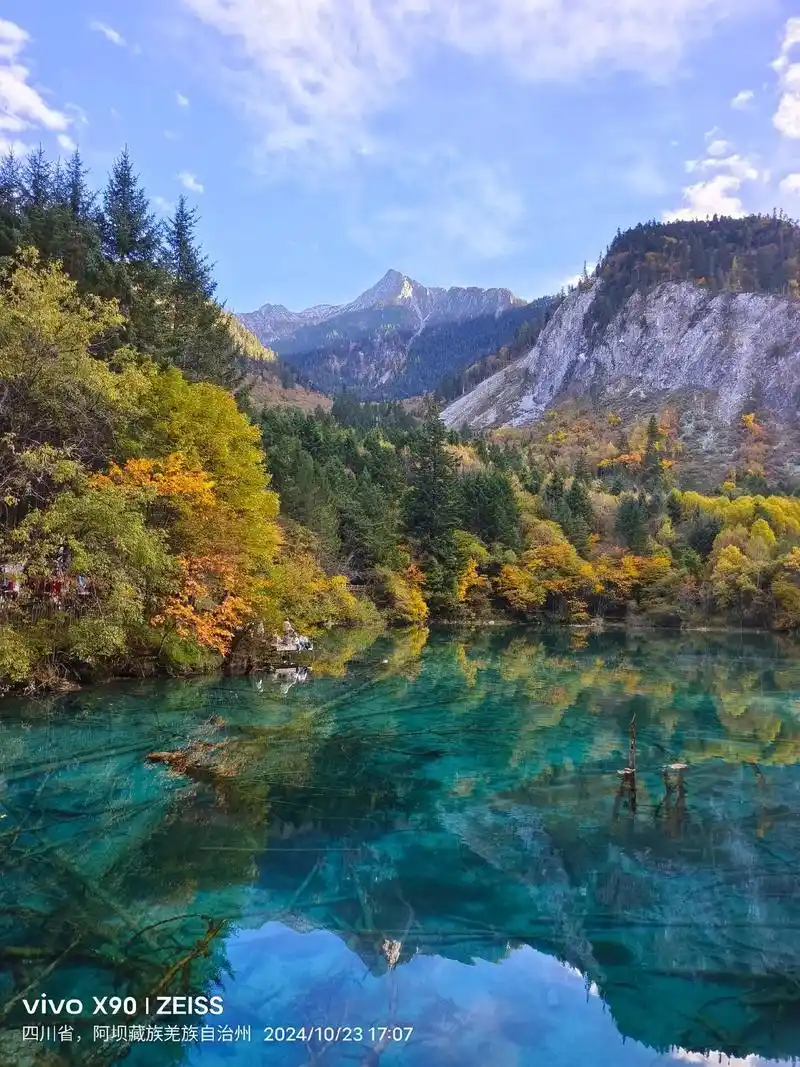
The crown jewel of Jiuzhaigou — a lake whose waters display an impossible palette of turquoise, emerald, gold, and sapphire simultaneously, created by calcium carbonate deposits, algae, and submerged ancient tree trunks visible through crystal-clear water.
This lake is consistently rated as the single most beautiful sight in Jiuzhaigou. The colors are not enhanced — they genuinely look like this, especially in autumn when red and gold foliage frames the impossible blue water.
 Universal Appeal
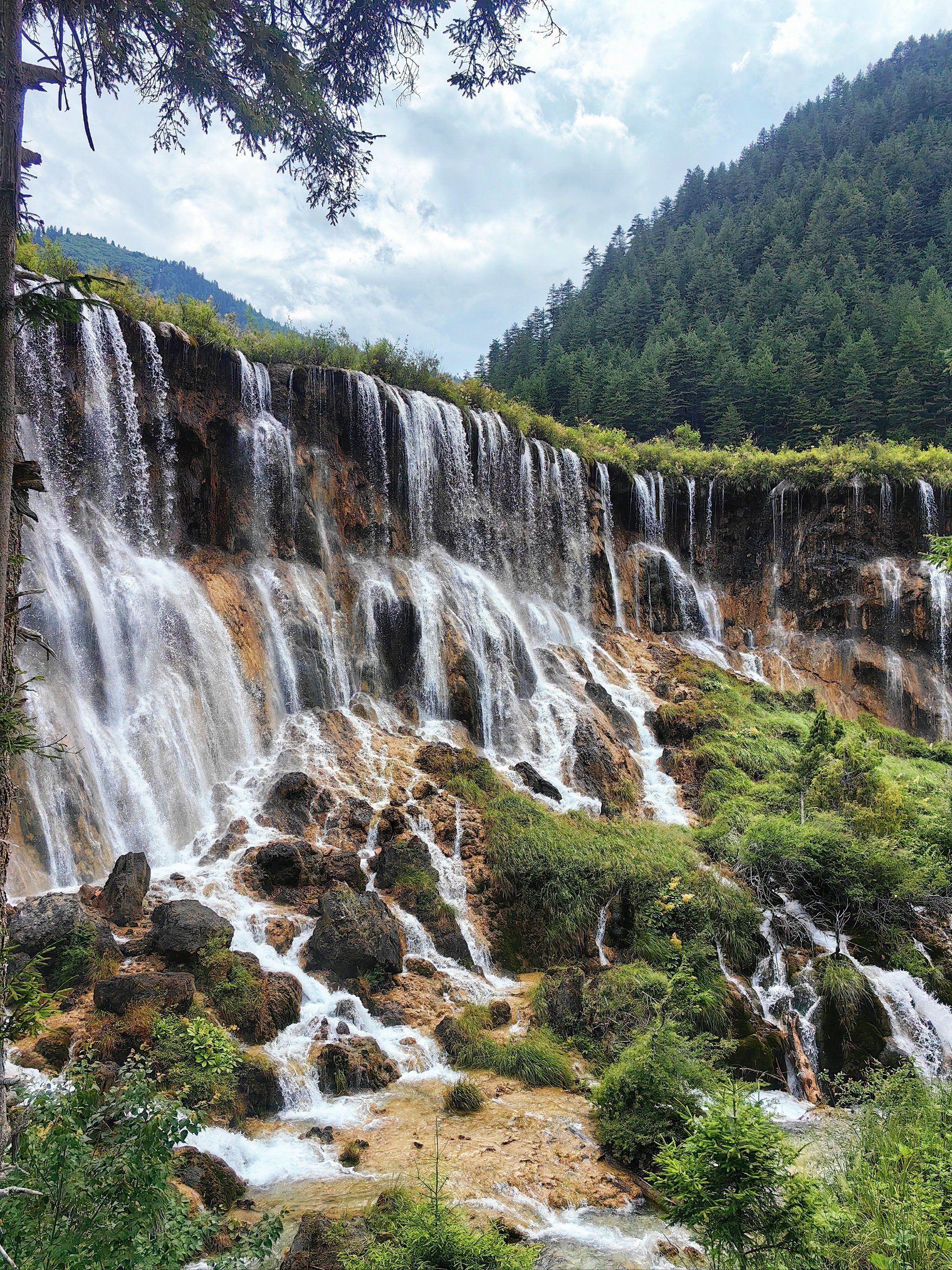
Nuorilang Waterfall (诺日朗瀑布)
China's widest highland calcium-deposit waterfall at 320 meters across and 25 meters high — a massive curtain of water that thunders year-round and fr...
 Universal Appeal
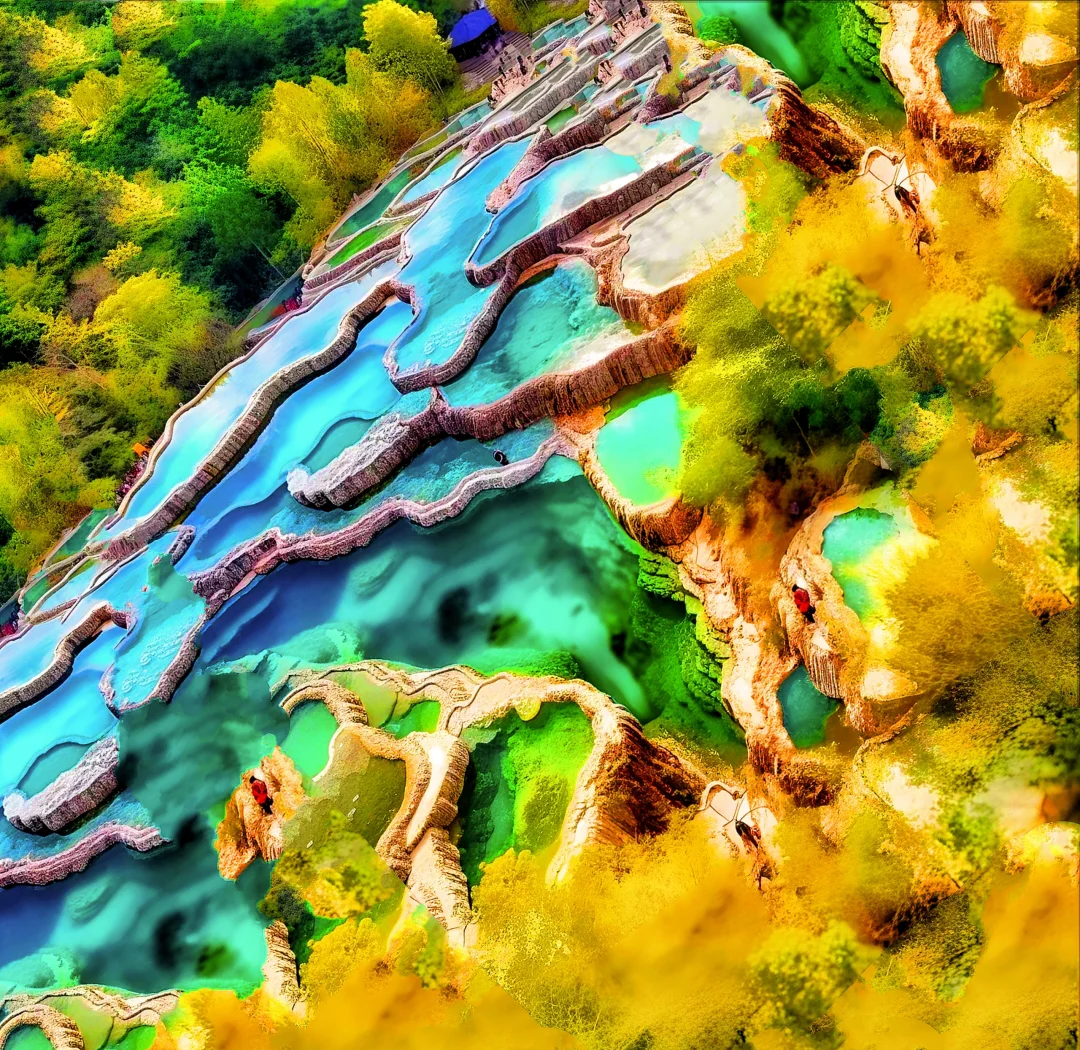
Five-Color Pool (五彩池)
The smallest but most vibrantly colored lake in Jiuzhaigou — a tiny pool in Zechawa Valley that concentrates intense blues, greens, and yellows into a...
 Universal Appeal
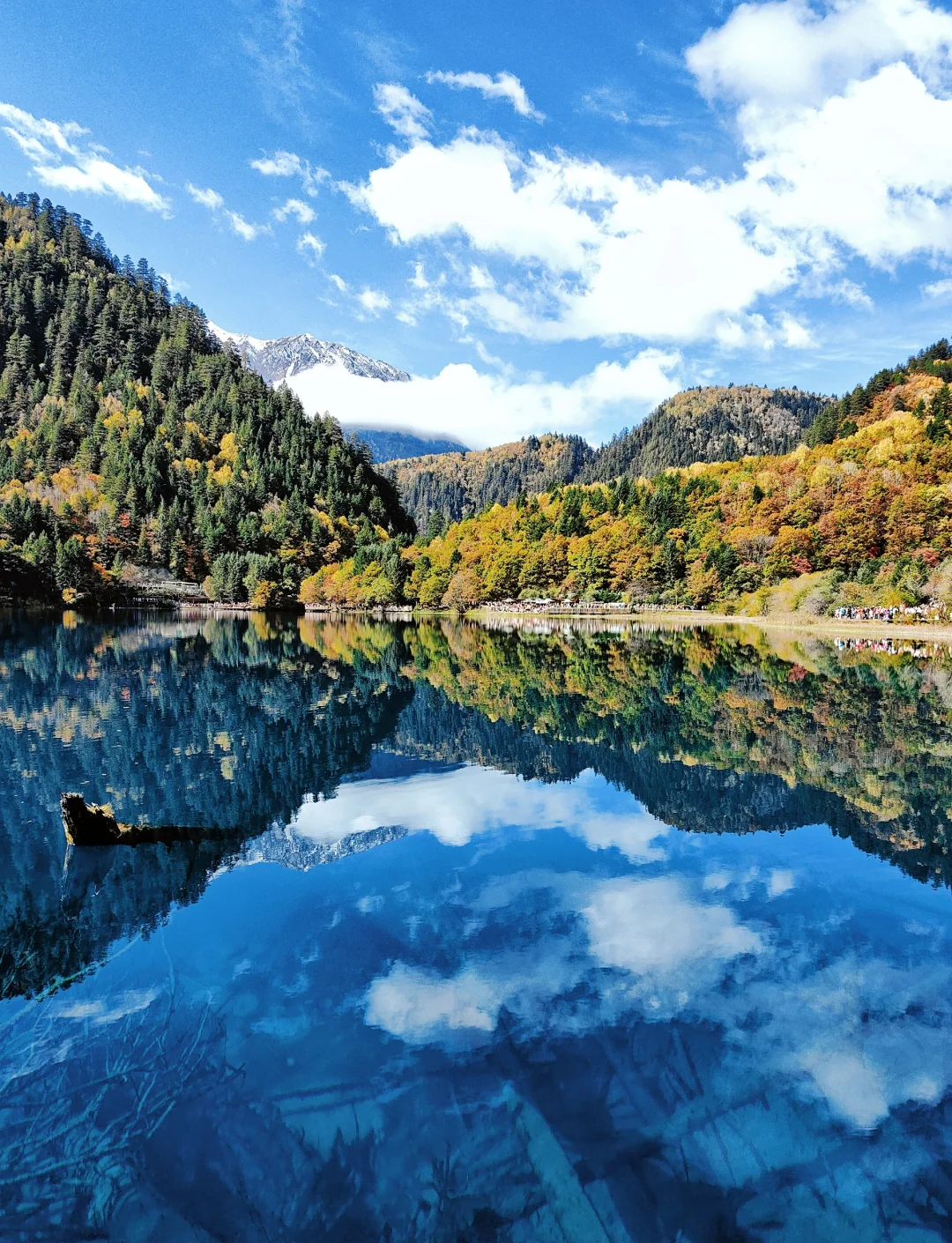
Mirror Lake (镜海)
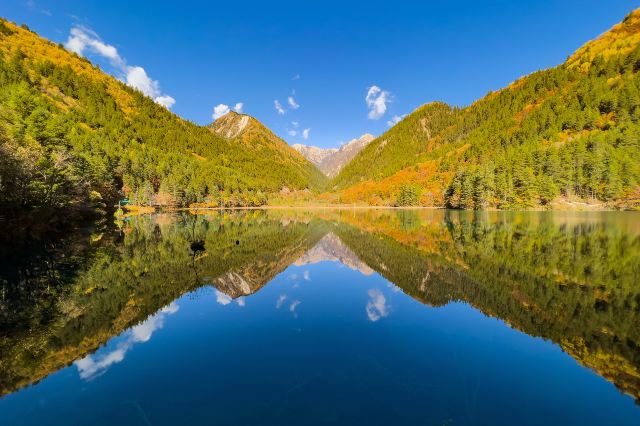
A perfectly still lake that creates flawless reflections of the surrounding mountains, forests, and sky — so perfect that photographs are impossible t...
 Culturally Interesting
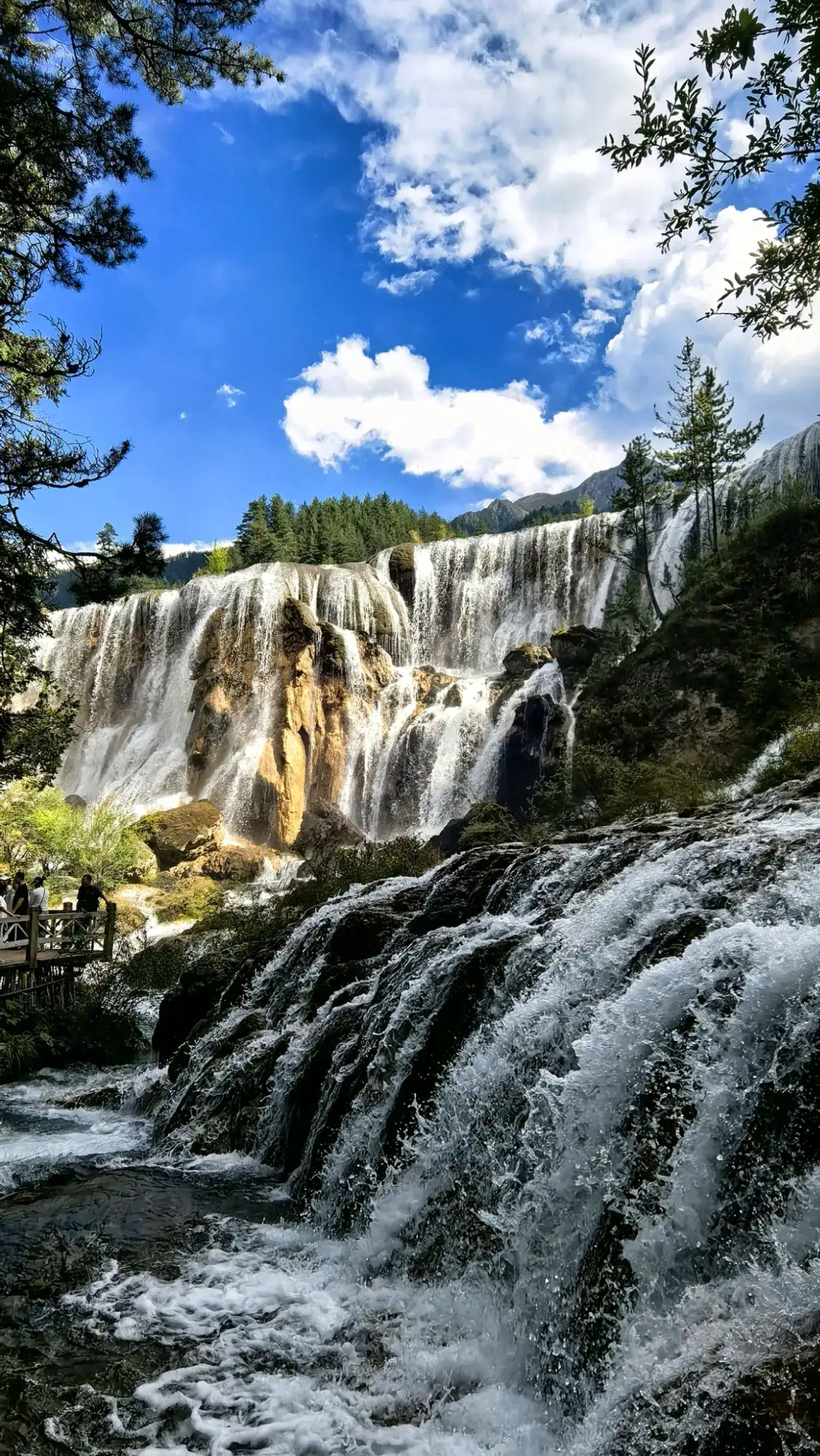
Pearl Shoal Waterfall (珍珠滩瀑布)
A broad, cascading waterfall that drops 28 meters across a wide limestone shelf — famous as the filming location for the classic Chinese TV series 'Jo...
What Most Visitors Miss
Walking the boardwalks between bus stops instead of riding the shuttle
Most visitors ride the bus between every stop, missing the most beautiful sections — the quiet forest paths between lakes where you can hear birds, feel the mist from waterfalls, and see wildlife. The walk between Pearl Shoal and Five Flower Lake through pristine forest is arguably the best experience in the park.
The Tibetan villages inside the park (树正寨 etc.)
The park is named after nine Tibetan villages, but most visitors rush past them to see lakes. The villages offer a glimpse into Tibetan highland life, with prayer flags, traditional houses, and occasionally local crafts for sale.
Visiting in winter
Over 90% of visitors come in autumn, but winter Jiuzhaigou is magical — frozen waterfalls, ice-covered lakes with visible colors beneath, snow-covered forests, and almost no crowds. Tickets are less than half the peak price.
Plan Your Visit
How Long to Visit
main highlights of one or two valleys using shuttle buses — still a full day
starting at park opening (all three valleys, walking some boardwalk sections between bus stops for the best views
s (explore each valley thoroughly with time for photography, walking the boardwalks, and visiting the Tibetan village areas
Smart Route
Enter at opening and take the shuttle bus directly to the farthest point: Primeval Forest or Long Lake (depending on which branch opens first). Work your way back down, getting off at each stop. The recommended flow: Bus to Long Lake (Zechawa) > walk to Five-Color Pool > bus back to Nuorilang Center > bus to Primeval Forest (Rize) > walk down through Panda Lake, Five Flower Lake, Pearl Shoal Waterfall > bus back to Nuorilang for lunch > walk the Shuzheng Valley boardwalk downhill back to the entrance, passing through the tree-lined lakes and Tibetan villages.
Best Time to Visit
Enter when the park opens (7:30 AM summer, 8:30 AM winter)
National Day week (October 1-7) is overwhelmingly crowded — the park hits its daily visitor cap and tickets sell out weeks in advance
By Season
Spring
(April-May) offers flowers and fewer crowds at lower prices. Summer (June-August) is green and lush but rainy with peak crowds.
Summer
(June-August) is green and lush but rainy with peak crowds. Winter (December-March) reveals frozen waterfalls, ice-covered lakes, and snow-dusted forests with almost no crowds — a magical and underrated experience.
Autumn
(late September to early November) is the undisputed best season — the valley explodes in red, orange, and gold foliage reflected in turquoise water. Peak foliage is late October to early November.
Winter
Visit in the first week of November on a weekday — autumn foliage is still spectacular, but the National Day crowds have dissipated and ticket prices drop on November 16. For photographers, winter offers the most unique and least-photographed scenes.
What to Skip
Do not try to see everything from the bus windows — the boardwalk walks are the real experience. Skip the expensive buffet if possible and bring your own food (instant noodles requiring hot water are prohibited, but sandwiches, fruit, and snacks are fine). The souvenir shops at Nuorilang Center are overpriced.
Pro Tips
Sit on the left side of the shuttle bus on the main stem (Shuzheng Valley), the left side going up the left branch (Zechawa), and the right side going up the right branch (Rize) — these sides have the best views through the windows. During peak season, consider the VIP private minibus (¥300-500) — it saves hours of shuttle queuing and lets you control your schedule.
Photo Spots
Five Flower Lake from Tiger Stone (老虎石) elevated viewpoint
The elevated boardwalk offers a bird's-eye view of the entire lake's color palette. Mid-morning light brings out the best colors.
Mirror Lake (镜海) at dawn
Arrive before 9 AM when the water is perfectly still. No wind, no ripples, flawless reflections.
Nuorilang Waterfall in winter
Visit in January-February when the waterfall is partially or fully frozen into an ice curtain.
Shuzheng Lakes boardwalk with autumn foliage
Late October to early November, walk the boardwalk through the 19 cascading lakes with red and gold trees reflected in each.
Pair With
Huanglong Scenic Area (黄龙)
2-hour drive from Jiuzhaigou
Another UNESCO World Heritage Site just 2 hours from Jiuzhaigou, famous for thousands of colorful calcified terraced pools cascading down a mountain valley. Often combined in a single trip.
Songpan Ancient Town (松潘古城)
On the route between Huanglongjiuzhai Station and the park
A charming Tibetan-Qiang-Han frontier town with an intact ancient city wall, en route between the high-speed train station and Jiuzhaigou. Good for a lunch stop or overnight stay.
Chengdu (for pandas and Sichuan food)
2.5 hours by high-speed train + transfer
Most visitors base their Jiuzhaigou trip from Chengdu, making it natural to combine with the Panda Base, Sichuan cuisine, and other Chengdu attractions.
Tickets & Access
Entrance ticket (peak season, Apr-Nov)
Valid for one day only — must repurchase for a second day
Entrance ticket (off-season, Nov-Mar)
More than 50% discount — winter is beautiful and uncrowded
Shuttle bus (peak season)
Mandatory for getting around the park — covers unlimited rides all day
Shuttle bus (off-season)
Unlimited rides on the park's internal bus system
Private VIP minibus
Skip the shuttle bus queues and travel at your own pace — worth considering during peak season
Opening Hours
Peak season (Apr 1-Nov 15): 07:30-18:00. Off-season (Nov 16-Mar 31): 08:30-18:00. Last ticket sale and entry: 14:00. Shuttle buses run continuously during operating hours.
How to Buy
Official Jiuzhaigou WeChat mini-program, Trip.com, or the Aba Tourism Network (阿坝旅游网). Passport number required for booking. The official platform sometimes has availability when third-party sites show sold out.
Passport: Yes — foreigners book with passport number online and present the physical passport at the entrance. Student discounts available with valid ID for ages 7-22.
Queue Situation
The main queue is at the entrance gate in the morning — arrive 30 minutes before opening during peak season. Shuttle bus queues at popular stops (Nuorilang Center, Five Flower Lake) can be 15-30 minutes during peak times. Walking between stops along the boardwalks avoids bus queues entirely and offers the best scenery.
Tips & Warnings
Altitude ranges from 2,000m to 3,100m — altitude sickness is possible
Stay hydrated, avoid alcohol the night before, and take the first day slowly. Most visitors acclimatize quickly at these moderate elevations, but those sensitive to altitude should carry medication. Long Lake (3,100m) is the highest point — assess how you feel before heading there.
Only one restaurant inside the park, and it is mediocre and crowded
The Nuorilang Service Center buffet (¥50-80) is the only food option inside and becomes chaotic at lunchtime (10:30 AM-2 PM). Bring snacks, energy bars, and water. Instant noodles requiring hot water are not allowed, but sandwiches, fruit, and packaged food are fine. If you forget supplies, drop us a message and we can arrange food delivery to your hotel in Zhangzha Town for you to carry in the next morning.
Tickets sell out during peak season — advance booking is mandatory
During autumn (especially October) and National Day week, tickets can sell out days or weeks in advance. Book the moment your dates are confirmed. Have backup dates ready. Check the official WeChat mini-program first as it sometimes has availability when third-party sites show sold out.
The journey from Chengdu is long and sometimes dangerous
Mountain roads are subject to landslides and closures, especially in summer rainy season. The new high-speed train is the safest and most reliable option. If driving, check road conditions before departing. Do not attempt to day-trip from Chengdu — you need at least one night near the park. We can book your high-speed train tickets and arrange a reliable car transfer from the station to your hotel near the park.
What to Bring
Wear
Layers are essential — temperatures can swing 15-20°C between morning shade and afternoon sun. A warm jacket or fleece even in summer. Waterproof rain jacket. Comfortable walking shoes with grip (boardwalks are wet). In winter, full cold-weather gear including thermal layers, gloves, and warm hat.
Bring
Food and snacks (limited options inside). Water bottle. Rain gear. Sunscreen and sunglasses (intense UV at altitude). Warm layers. Portable charger. Cash backup. Downloaded park map. Camera with charged batteries (cold drains batteries faster).
Don't Bring
Instant noodles requiring hot water (prohibited). Drones (prohibited). Excessive luggage (leave at your hotel).
Physical Reality
moderate
The shuttle bus system makes the park accessible without excessive walking. However, walking the boardwalk trails (the best way to experience the park) involves 10-20km of gentle paths with some elevation changes. All boardwalks are well-maintained with railings. The park is at 2,000-3,100m altitude, which adds a physical dimension to any exertion.
Foreigners Watch Out
- Ticket booking online requires a Chinese platform (WeChat mini-program or Aba Tourism Network). Trip.com is the most foreigner-friendly booking option. Book well in advance during peak season.
- The park enforces a strict daily visitor cap — showing up without a pre-booked ticket means you cannot enter, period. There are no same-day walk-up tickets when the cap is reached.
- Zhangzha Town (the gateway town) has very limited English — booking accommodation and transportation in advance is essential. Your hotel can often help arrange transport.
- Mobile payment (WeChat/Alipay) is essentially the only payment method inside the park and in Zhangzha Town. Carry cash as emergency backup.
- The shuttle bus announcements are in Chinese and basic English, but navigating the system requires some planning. Download the park map in advance and note the Chinese names of your target stops.
If Things Go Wrong
Tickets sold out for your planned date
→ Check the official booking platform repeatedly — cancellations happen and tickets are released in batches. Try different platforms (official WeChat mini-program, Trip.com, Aba Tourism Network). Some hotels near the park can assist with ticket procurement. Our concierge team knows the release schedule and can monitor availability for you — message us with your preferred dates and we will keep checking.
Weather is rainy or overcast, dulling the lake colors
→ The lakes still show color even in overcast conditions, though less vibrant than in sunshine. Focus on waterfalls (which are more dramatic in rain) and forest walks (which are atmospheric in mist). Five-Color Pool retains its colors even on cloudy days.
Altitude sickness symptoms (headache, nausea, breathlessness)
→ Stay at lower elevations within the park (Shuzheng Valley is 2,000-2,400m). Avoid Long Lake (3,100m). Rest at Nuorilang Service Center which has medical facilities. Portable oxygen cans are available for purchase inside the park.
Useful Chinese
Tap to reveal the English meaning