About Stone Forest (Shilin)
“Walking through an alien planet sculpted from an ancient seabed — towering grey stone pillars crowd around you like a frozen army, narrow paths twist through crevices barely wide enough for one person, and the occasional burst of birdsong or Yi folk music reminds you this stone labyrinth has been someone's home for millennia.”
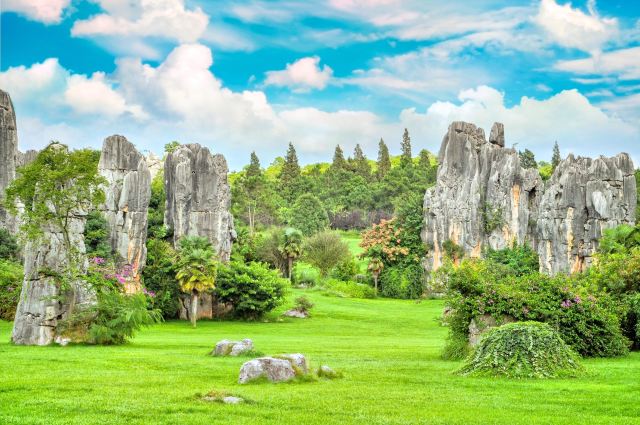
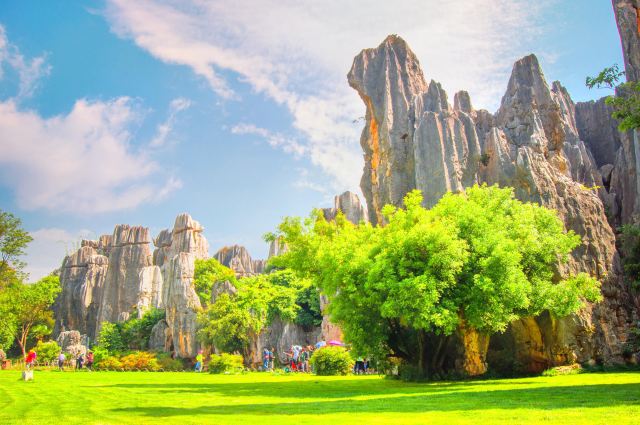
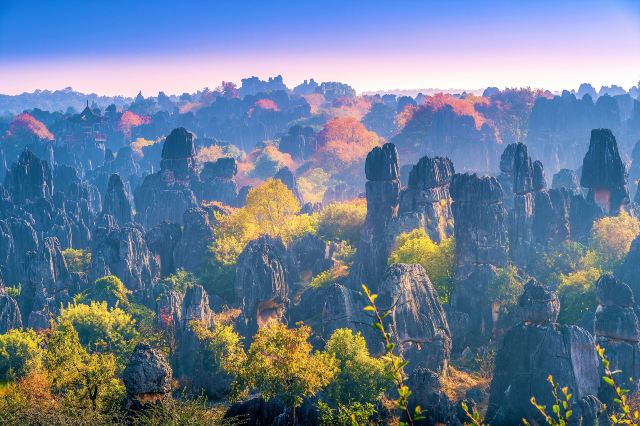
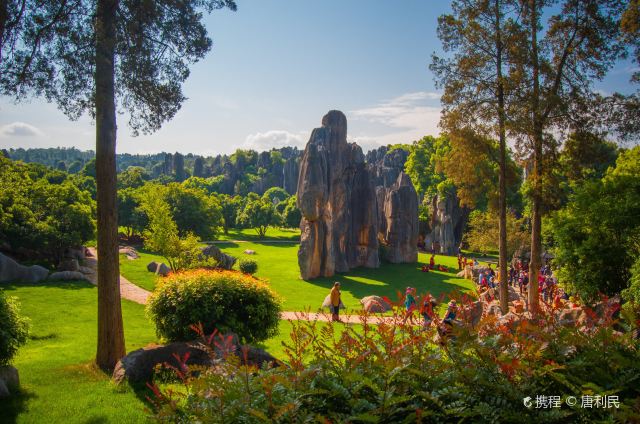
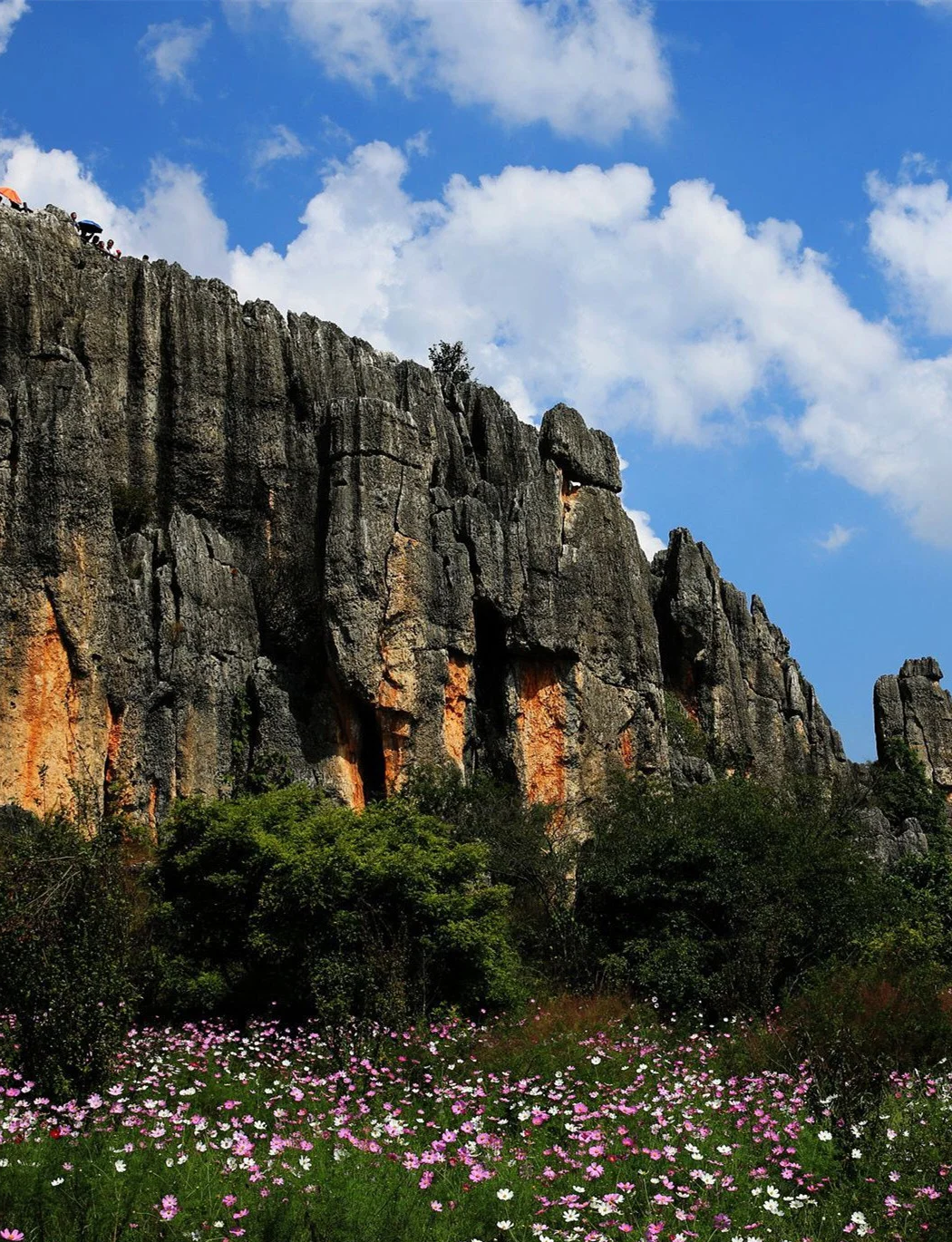
Stone Forest is a UNESCO World Heritage Site about 78 km southeast of Kunming, featuring one of Earth's most spectacular karst landscapes. Towering limestone pillars — some exceeding 40 meters — rise like a petrified forest across 350 square kilometers, formed from an ancient seabed over 270 million years. The scenic area divides into several zones: Greater Stone Forest (dense, dramatic stone peaks with labyrinth-like paths), Lesser Stone Forest (more delicate formations and the iconic Ashima statue), Naigu Stone Forest (wilder, darker formations with fewer tourists), Bushao Hill (highest point with panoramic views and marine fossils), and Long Lake. Most visitors focus on the Greater and Lesser Stone Forests, which together require 3-4 hours minimum. The experience of walking through narrow stone corridors, emerging into clearing with towering pillars, and climbing to viewpoints overlooking a sea of stone peaks is genuinely awe-inspiring — multiple reviewers who arrived skeptical left deeply impressed. The site is intertwined with Yi ethnic minority (Sani people) culture, particularly the legend of Ashima, a beautiful girl who was turned to stone. You will encounter Yi guides in colorful traditional dress, ethnic performances, and cultural touches throughout. The downsides are real: it gets extremely crowded (especially during holidays and when tour groups arrive mid-morning), the 3 km distance from the visitor center to the actual scenic area feels like a money grab for the 25 RMB shuttle bus, signage inside the stone labyrinth is confusing, and the 130 RMB ticket price feels steep to some. But for sheer geological spectacle and the surreal experience of navigating a stone maze carved by 270 million years of erosion, Stone Forest delivers.
Top Questions from Travelers
Why This Place Matters
Stone Forest's significance extends far beyond geology. This is the heartland of the Sani people, a branch of the Yi ethnic minority, and the landscape is inseparable from their most cherished cultural narrative — the epic poem of Ashima. In this ancient tale, Ashima was a beautiful, brave Sani girl who fought against the oppressive son of a local chief who tried to force her into marriage. With her lover Ahei, she resisted until a flood killed her, whereupon she was transformed into the stone pillar that still bears her likeness by Jade Bird Pool. The story, designated as one of China's first national-level intangible cultural heritage items, and the 1964 film adaptation made Ashima a symbol of resistance and true love across China. The stone forest itself carries deep spiritual meaning for the Sani people — local legend says a hero used magic to drive mountain stones northward, and when a divine rooster crowed at dawn, the stones froze in place, creating the forest. Annual festivals like the Torch Festival (火把节) and the Mizhi Festival continue traditions stretching back centuries. The geological story is equally epic: 270 million years ago, this was a shallow sea. Limestone sediments accumulated hundreds of meters thick. Tectonic uplift pushed the seabed into mountains, and 60 million years of wind, rain, and groundwater erosion sculpted the pillars we see today. UNESCO recognized Stone Forest as a World Heritage Site in 2007 as part of the South China Karst, calling it the most diverse collection of karst formations anywhere on Earth.
Need help planning?
ChinaPal handles everything
- Book English-speaking guides
- Arrange transport & tickets
- Real-time help during your visit
- Restaurant reservations nearby
Highlights
5 iconic experiences that define a visit
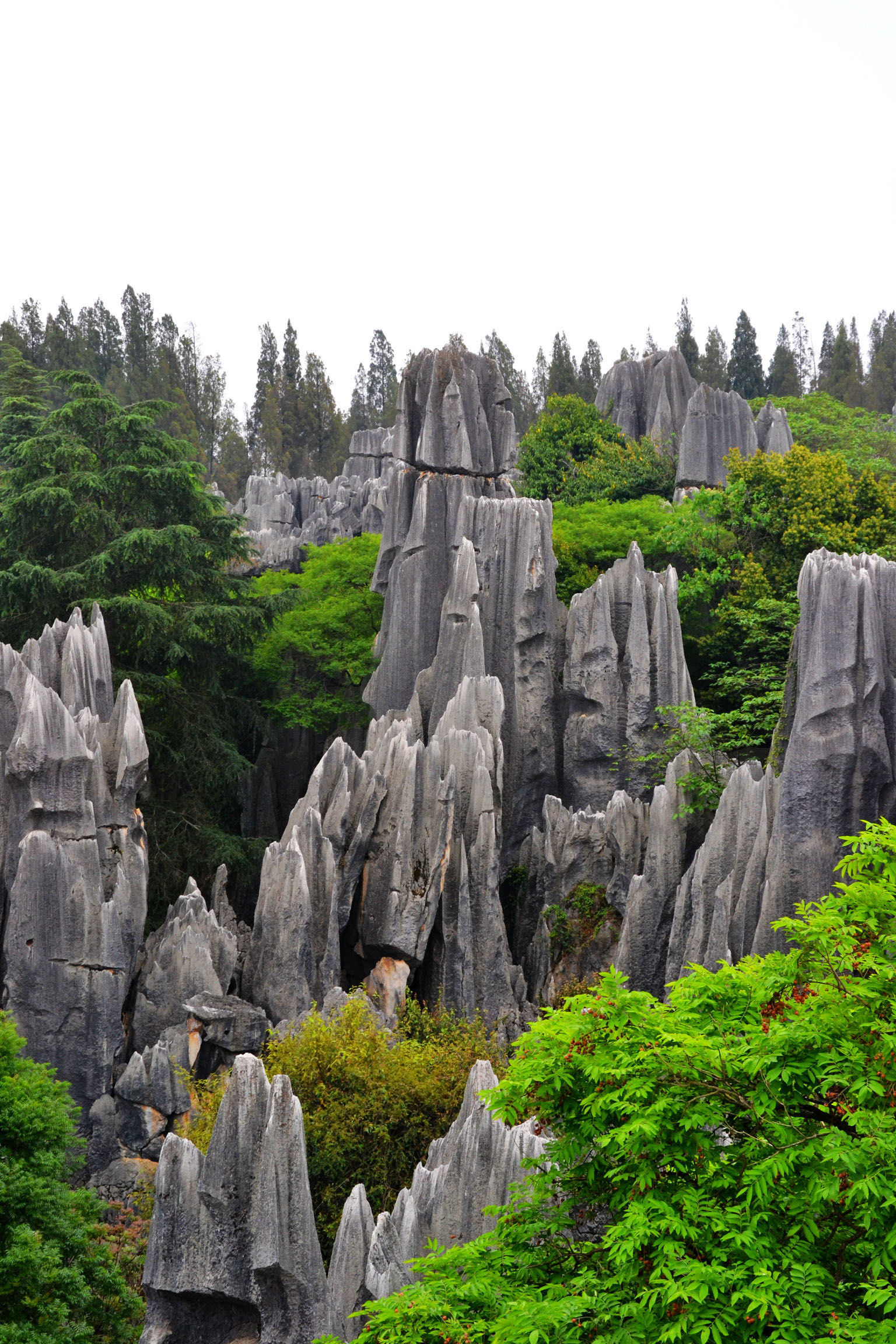
Greater Stone Forest (大石林)
The crown jewel — a dense labyrinth of towering grey limestone pillars up to 40+ meters high, threaded with narrow paths, stone staircases, and dramatic viewpoints. Key spots include the iconic 'Stone Forest' (石林) inscription by warlord Long Yun, Sword Peak Pool (剑峰池) with crystal-clear reflections, 'A Hair's Breadth' (千钧一发) where a boulder seems impossibly suspended between two cliffs, and Wangfeng Pavilion (望峰亭) for a panoramic view over the entire stone sea.
This is the 'wow' moment — even well-traveled visitors compare it to nothing they've seen before. The maze effect of wandering through narrow stone corridors that suddenly open into cathedral-like clearings is universally thrilling. Multiple visitors report getting happily lost for 1-2 hours.
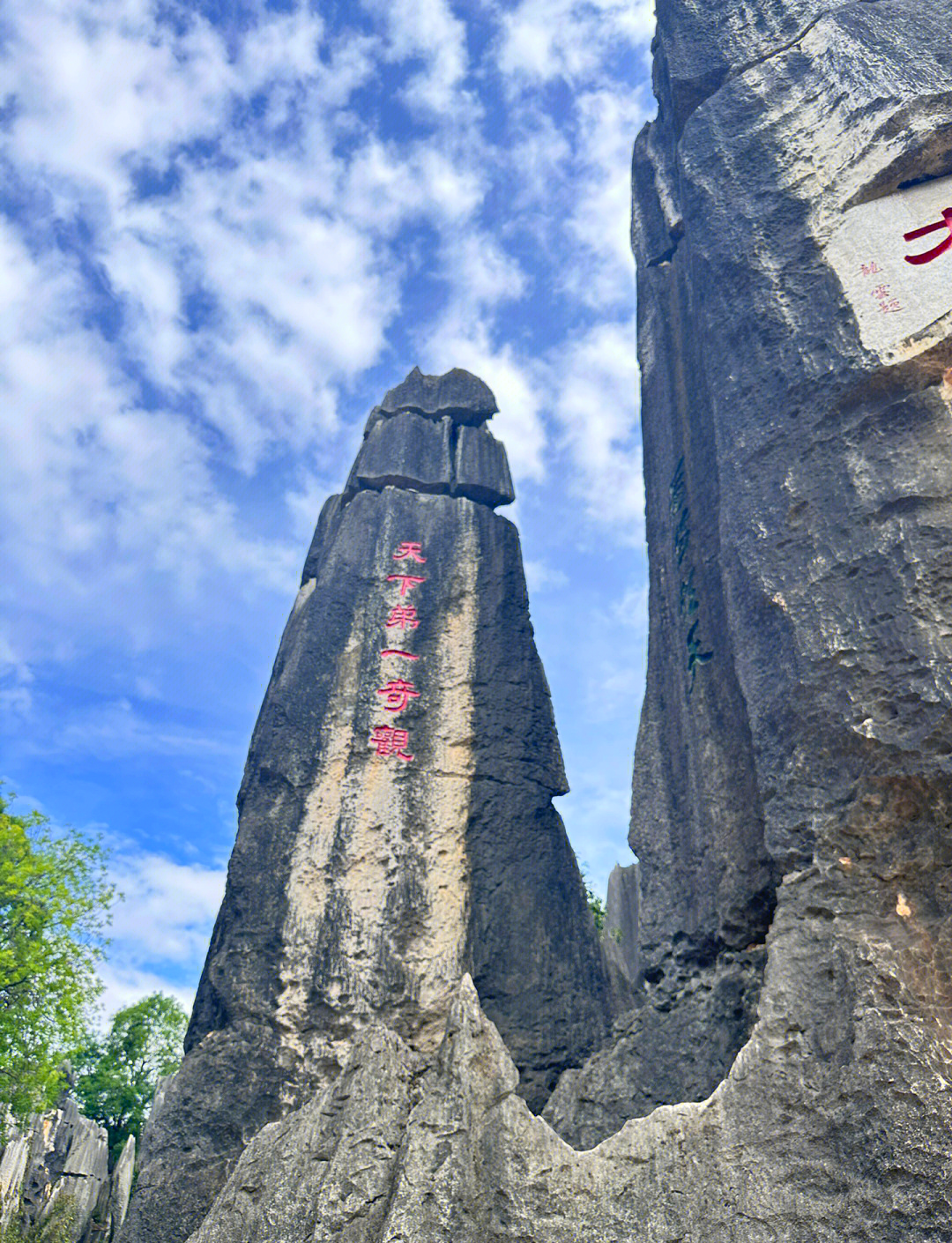 Culturally Interesting
Lesser Stone Forest & Ashima Stone (小石林/阿诗玛)
A more open, garden-like area with sparser but elegant stone formations, green lawns, and reflecting pools. The star attraction is the Ashima Stone — ...
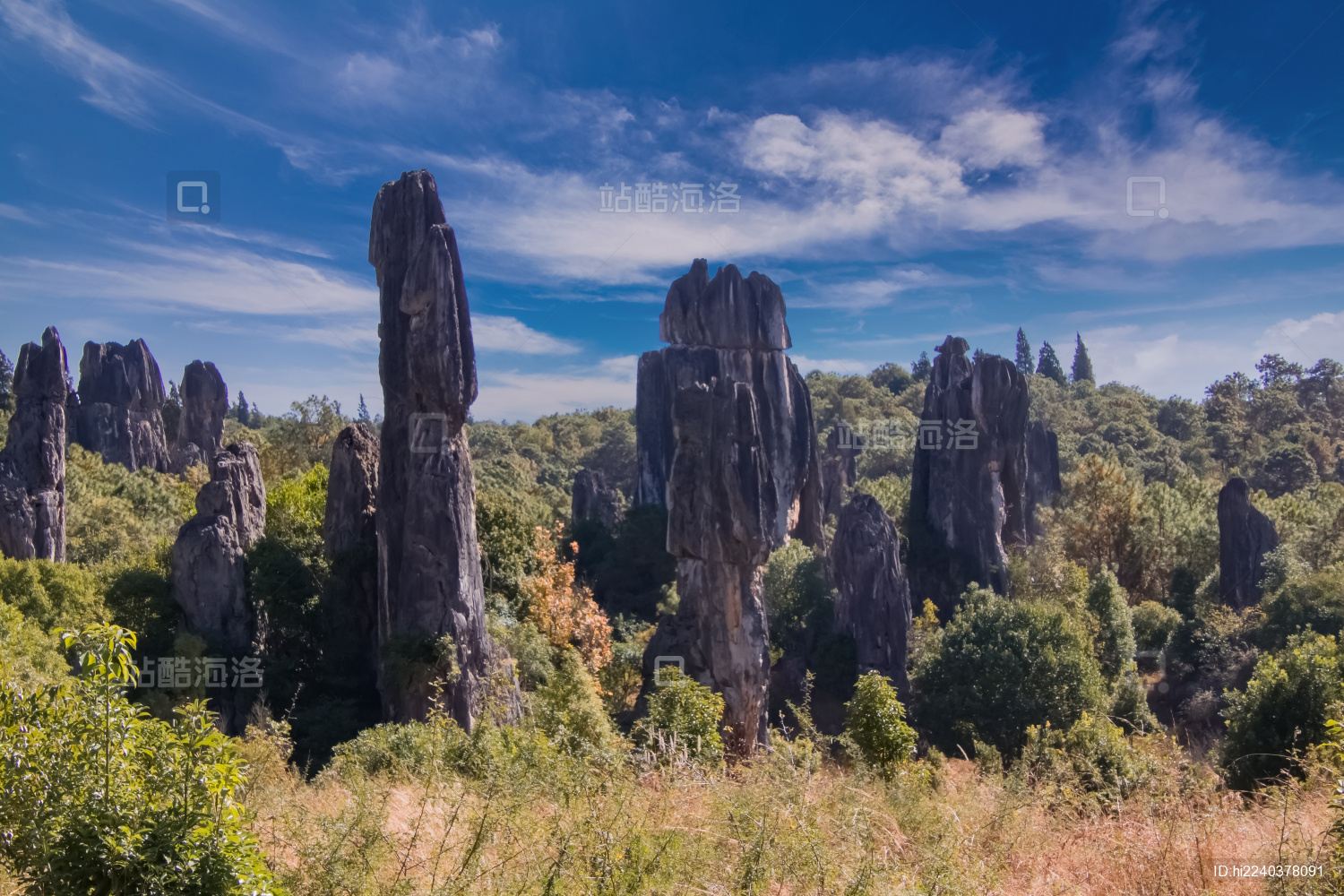 Universal Appeal
Bushao Hill (步哨山)
The highest point in the scenic area (about 50 meters above Greater Stone Forest), covered with columnar stone forests interspersed with pine trees. C...
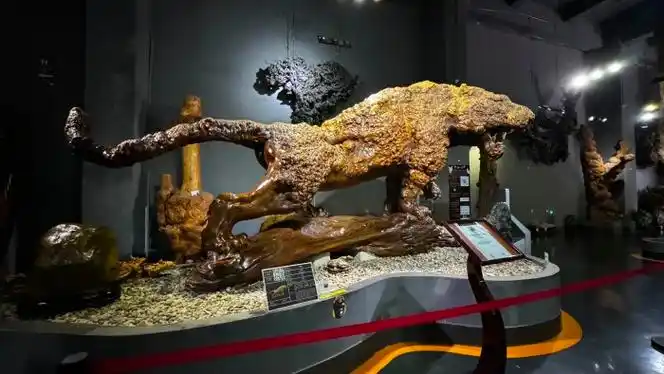 Culturally Interesting
Geology Museum (石林喀斯特地质科研博物馆)
Located near the scenic entrance, this free-with-ticket museum houses an impressive collection of rocks, minerals, fossils (both local and worldwide),...
 Culturally Interesting
Yi (Sani) ethnic culture experiences
The Stone Forest is homeland to the Sani people, a branch of the Yi ethnic minority. Throughout the scenic area, you'll encounter guides in vibrant pi...
What Most Visitors Miss
Bushao Hill and the fossil trails
Tour groups skip it entirely, heading straight to Greater and Lesser Stone Forest. But Bushao Hill offers the best panoramic views, visible 270-million-year-old marine fossils embedded in rock, and near-total solitude. Only 500 meters from the entrance.
Li Zi Yuan Qing (李子园箐) ancient cliff paintings and stone formations
This area preserves a wilder, less manicured feel with developing stone formations and ancient Yi cliff paintings. Almost no tourists venture here. Connected by paths to Greater Stone Forest — you can walk through instead of backtracking.
Naigu Stone Forest (乃古石林) — the 'ancient black' stone forest
Located 10 km north of the main area, Naigu features taller, darker, more rugged formations with underground caves. The name means 'ancient black' in Yi language. Only ¥25 admission. Far less crowded and offers a dramatically different atmosphere — raw and wild compared to the manicured main area.
The inner-loop shuttle bus route
Most visitors don't realize the shuttle bus has both an outer loop (visitor center to entrance) and an inner loop between Greater and Lesser Stone Forest. The inner loop route passes through beautiful scenery. Ask the driver about it.
Plan Your Visit
How Long to Visit
Greater and Lesser Stone Forest highlights only, with shuttle bus
Greater Stone Forest labyrinth, viewpoints, Lesser Stone Forest with Ashima, Geology Museum
or full day (add Bushao Hill, Li Zi Yuan Qing ancient cliff paintings, Wannian Lingzhi area, and Naigu Stone Forest
Smart Route
Take shuttle bus to entrance
Detour to Geology Museum if interested (30 min)
Head to Bushao Hill first (fewer people, best views, fossils)
Enter Greater Stone Forest from the side
Navigate the labyrinth: Stone Forest inscription
Sword Peak Pool
A Hair's Breadth
climb to Wangfeng Pavilion
Take inner shuttle or walk to Lesser Stone Forest
Ashima Stone and Jade Bird Pool
If time remains, explore Li Zi Yuan Qing or Wannian Lingzhi areas
Take shuttle bus out.
Best Time to Visit
Arrive at 7:30 AM when gates open — the first hour before tour groups arrive (around 10 AM) is magical
Mid-morning to early afternoon (10 AM - 2 PM) when tour groups flood the main paths, especially around the 'Stone Forest' inscription and Ashima statue
By Season
Spring
Summer
(June-August) brings rain which makes paths slippery but also creates atmospheric mist effects and fewer crowds. Autumn (September-November) has clear skies.
Autumn
(September-November) has clear skies. Winter (December-February) is cooler but still mild compared to most of China — expect 10-20°C on sunny days.
Winter
(December-February) is cooler but still mild compared to most of China — expect 10-20°C on sunny days. The Torch Festival (around late June by lunar calendar) adds spectacular Yi cultural celebrations.
Stay overnight at a hotel near the scenic area and enter first thing in the morning. You will have the stone labyrinth almost to yourself for photography and exploration. By the time tour buses arrive from Kunming around 10 AM, you can retreat to the less-visited Bushao Hill or Li Zi Yuan Qing areas where you may not see another soul.
What to Skip
The 3 km walk from visitor center to entrance (nothing to see, save your energy). The souvenir shops in the commercial area outside. The paid 3D/VR experiences near the entrance. If short on time, skip the Wannian Lingzhi area (most distant, similar formations to what you've already seen).
Pro Tips
Walk counter-clockwise through Greater Stone Forest to move with the flow of tour groups rather than against them — narrow paths make opposing traffic a standstill. Download Baidu Maps or Amap before visiting — GPS works inside the stone forest and prevents getting truly lost. Bring a portable charger — you'll use your phone for navigation and photography all day. Renting ethnic costume for photos is cheap (¥10) and surprisingly fun. If visiting with elderly family members, the shuttle bus inner loop lets them see much of the scenery without excessive walking.
Photo Spots
Wangfeng Pavilion (望峰亭) — top of Greater Stone Forest
Go early morning or late afternoon for the best light. The panoramic view of the entire stone sea is the signature shot. Use a wide-angle lens to capture the full expanse of stone peaks stretching to the horizon.
Sword Peak Pool (剑峰池)
Best photographed when sunlight penetrates the pool area — late morning on clear days. The still water creates mirror reflections of the surrounding sword-shaped stone peaks.
Ashima Stone at Jade Bird Pool (玉鸟池旁阿诗玛)
Late afternoon light is most flattering. Try to capture the reflection in the pool. The spot gets extremely crowded mid-day — patience or early/late timing is key.
Narrow passages inside Greater Stone Forest (一线天/极狭通人)
Look up when you're in the narrow passages — the strip of sky between towering stone walls creates dramatic compositions. A person in the frame shows the incredible scale.
Pair With
Jiuxiang Scenic Area (九乡风景区)
1-1.5 hours by car from Stone Forest
The perfect complement — Stone Forest shows karst above ground, Jiuxiang shows it underground with spectacular caves, underground rivers, and waterfalls. Most day tours combine both. Jiuxiang is about 60 km from Stone Forest.
Naigu Stone Forest (乃古石林)
15-minute drive from main Stone Forest
Only 10 km north of the main Stone Forest, this less-visited area features dramatically different dark-colored formations, underground caves, and far fewer tourists. Separate ¥25 admission. Perfect for visitors who want a wilder, more authentic stone forest experience.
Kunming City attractions (翠湖/滇池/金殿)
1.5 hours back to Kunming city center
Stone Forest is a half-day trip — combine with Kunming's Green Lake for bird-watching, Dianchi Lake for sunsets, or the Golden Temple for Taoist architecture. Return to Kunming by mid-afternoon for city exploration.
Tickets & Access
Adult admission
Sometimes half-price (¥65) during promotional periods
Shuttle bus (visitor center to scenic entrance)
Highly recommended — 3 km walk with no scenery otherwise
Yi guide (optional)
Local Sani guides available at entrance; significantly enhances experience
Ethnic costume photo rental
Cheap and fun — photos are printed and laminated on the spot
Opening Hours
Year-round 07:30-18:00 (last entry 18:00). Some sources note winter hours of 08:00-17:30.
How to Buy
Buy tickets at the visitor center (cash or mobile payment) or pre-book on Ctrip, Meituan, or the scenic area's official WeChat mini-program. Scan ID/passport to enter.
Passport: Yes — foreigners can purchase tickets with passport at the ticket window. Online booking platforms also accept passport numbers.
Queue Situation
Minimal queuing to enter the park. The real crowding is at popular photo spots inside — the 'Stone Forest' inscription, Ashima statue, and Wangfeng Pavilion viewpoint can have long waits for photos during peak hours. Shuttle bus can have 10-20 minute waits during peak times.
Tips & Warnings
Extreme crowding at peak times
Tour groups arrive from Kunming around 10 AM and cluster at the main photo spots (Stone Forest inscription, Ashima, Wangfeng Pavilion). The narrow stone paths create bottlenecks. Visit early morning or late afternoon, and spend peak hours on Bushao Hill or side trails where you may be completely alone.
The 3 km gap between visitor center and scenic entrance
This is the most complained-about aspect — you must pay ¥25 for a shuttle or walk 30 minutes through an area with nothing to see. Buy the shuttle ticket. If driving, note that the parking lot is also far from the visitor center, adding another shuttle segment.
Maze-like paths — getting lost is real
Greater Stone Forest is a genuine labyrinth. Multiple visitors report getting lost for 1-2 hours. SOS phones are installed throughout. Follow signpost arrows for the red (shorter) or blue (longer) route. Use GPS on your phone. If lost, head uphill to find a viewpoint and reorient. Getting lost is actually part of the fun if you have time — but don't attempt side paths if you're on a tight schedule.
Slippery and steep in places
Stone staircases within the formations can be very steep and slippery when wet. Proper shoes with good grip are essential, not sandals or dress shoes. Hold railings where available. Take extra care during or after rain.
Very limited food and water inside
There is virtually no food or drink available inside the core scenic area except one spot near Lotus Pavilion selling instant noodles and snacks. Bring your own water (at least 1 liter) and snacks. Restaurants are only outside the scenic area near the commercial center. If you forgot supplies, let us know your location and we can arrange delivery to the visitor center area.
Tour guide loudspeakers can be overwhelming
Chinese tour guides use portable amplifiers that echo through the stone corridors. This can be jarring in narrow passages. If noise-sensitive, head away from tour groups into the quieter side paths — the contrast between the packed main route and deserted side trails is dramatic.
What to Bring
Wear
Comfortable walking shoes with good traction (this is non-negotiable — the stone paths are uneven and slippery). Light, breathable layers. Sunscreen and a hat — UV is strong at 1,700 meters even when it doesn't feel hot. A light rain jacket in summer. Some visitors enjoy renting traditional Yi costumes (¥10) for photos inside the park.
Bring
At least 1 liter of water and snacks. Sunscreen. Camera with wide-angle capability. Portable charger (you'll use your phone heavily for navigation and photos). Cash (¥100-200 in small bills). Comfortable daypack. Rain gear in summer. Walking stick if traveling with elderly visitors (not available for rent inside).
Don't Bring
Heavy luggage (lockers available at the visitor center for ¥5-10). High heels or sandals (you will regret it). A tight schedule — give yourself at least 4 hours including transit from the visitor center.
Physical Reality
moderate
Extensive walking on stone paths — expect 8,000-15,000+ steps over 3-5 hours. The Greater Stone Forest has numerous stone staircases, some quite steep with narrow treads. Some passages require ducking or squeezing through narrow gaps. The shuttle bus reduces the flat walking, but the stone formations themselves require climbing up and down. Bushao Hill involves a sustained uphill walk. Lesser Stone Forest is relatively flat and easier. Wheelchair access is limited to the outer paths and shuttle bus routes — the inner stone labyrinth is not wheelchair accessible.
Foreigners Watch Out
- Getting there independently requires planning: high-speed train from Kunming South to Shilin West (20 min, ¥19), then bus 99 (40-50 min, ¥10) to the scenic area. Or take a tourist direct bus from Kunming East Bus Station (90 min, ¥34). Return buses stop running in late afternoon — check the last departure time (usually around 4-5 PM for bus 99).
- The ticket price of ¥130 plus ¥25 shuttle is expensive by Chinese standards. Half-price promotions occur periodically — check before your visit. Students with valid ID get 50% off. Over 70 years old is free entry and free shuttle.
- English-speaking guides are rare but available at the tourist center for ~200 RMB. Most Yi guides speak only Chinese. If you don't have a guide, the colored route markers (red/blue) and Baidu Maps are your best navigation tools.
- Some visitors climb on the stone formations for photos despite prohibition signs — do not do this. The formations are fragile, and this behavior is a major complaint among conservation-minded visitors.
- Mobile payment (WeChat/Alipay) is dominant, but some vendors inside only accept cash. Bring ¥100-200 in small bills. There are no ATMs inside the scenic area.
- The scenic area is at ~1,700 meters elevation. While altitude sickness is very unlikely, the UV radiation is strong — sunscreen is essential even on cloudy days.
If Things Go Wrong
Completely lost in the stone labyrinth
→ Don't panic — look for SOS phone stations installed throughout the maze (press the button for help). Use your phone's GPS with Baidu Maps or Amap. Head uphill to gain a vantage point. Follow any path marked with arrows — all routes eventually lead out. Staff monitor CCTV cameras throughout. You can also message us with your GPS location and we’ll guide you out via chat.
Missed the last return bus to Kunming
→ Bus 99 to Shilin West Station runs until about 5 PM, and direct buses to Kunming East Bus Station run until about 4 PM. If you miss both, take a local bus or taxi to Shilin County town where you can find more transport options. If you’re stranded, message our concierge — we can call a DiDi or local driver for you and handle the Chinese-language negotiation.
Raining and paths are slippery
→ Rain makes the stone paths genuinely dangerous — slow down dramatically on stairs and slopes. Buy a disposable raincoat from vendors outside (¥10-20). Focus on wider paths and avoid the steepest sections. The rain actually creates beautiful atmospheric effects with mist threading between the stone pillars.
Useful Chinese
Tap to reveal the English meaning